



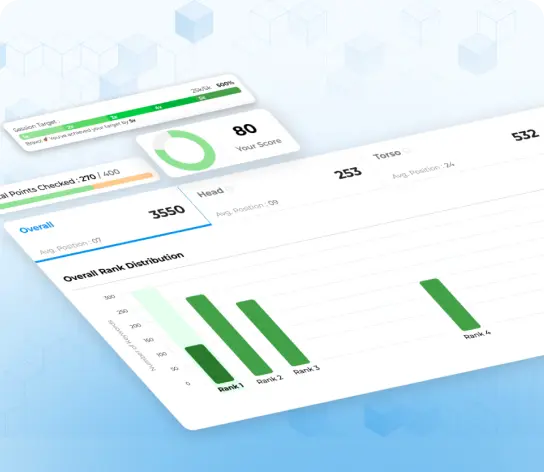






Webflow Development Services: Build High-Performing Websites
Webflow development services that turn a great-looking website into a fast, SEO-ready growth engine for your business.

Driving Growth for Mid-Market & Enterprise Ecommerce Brands



- 3.1B+ Organic Sessions
- 135+ Case Studies
- 39M+ Leads Generated
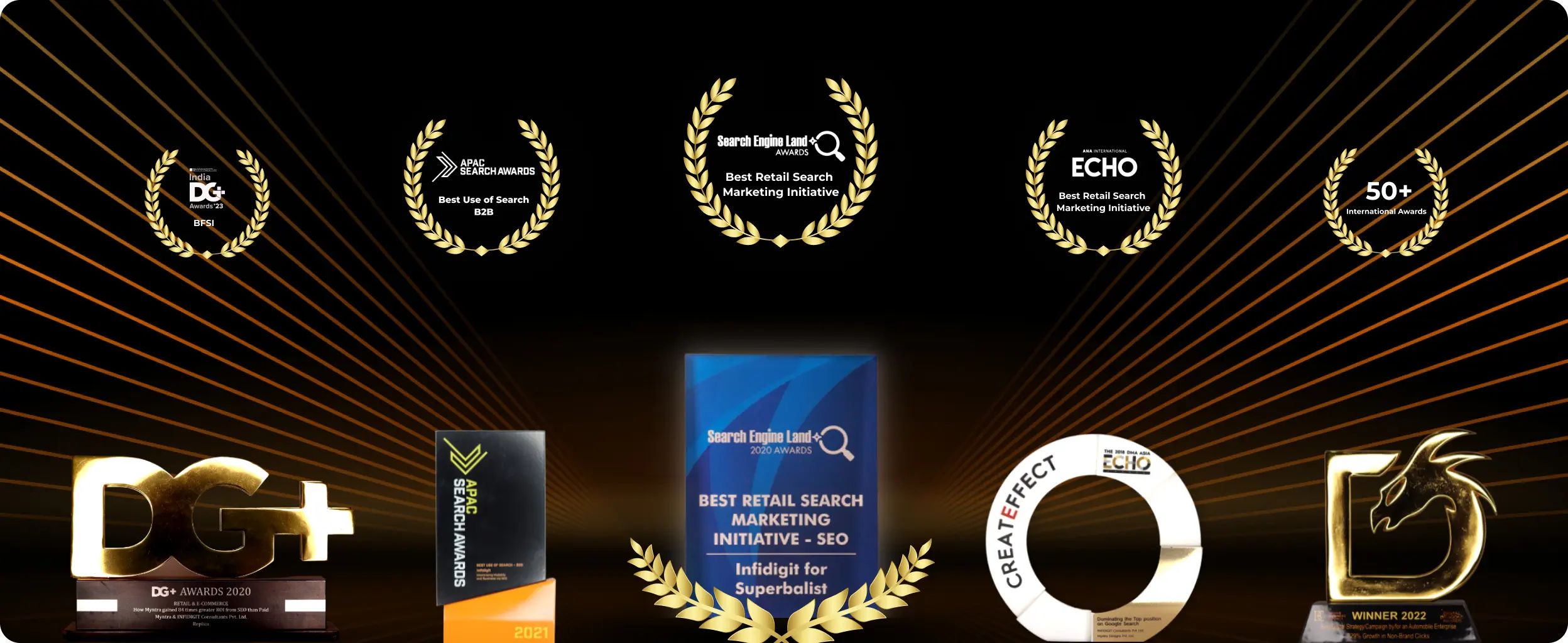
- 100+ Awards Won

Clients
We are trusted partners for brands to achieve organic success























BENEFITS
Benefits of Investing in Webflow Website Development Services

Better Search Visibility
Clean, semantic code lets search engines crawl and index your pages correctly from launch.

Improved Website Usability
Intuitive navigation and clear page hierarchy keep visitors engaged instead of hitting back.

Mobile-Friendly Design
Every layout adapts automatically across phones, tablets, and desktops without extra design work.

Faster Page Speed
Lightweight code and optimised assets mean pages load in seconds, not minutes.

SEO-Friendly Site Structure
Search-friendly URLs and clean markup make Webflow's built-in SEO services genuinely effective for growth.

Secure and Easy Maintenance
Built-in hosting, SSL, and CMS controls keep the site secure without constant developer intervention.
Challenges
Common Webflow Development Challenges Businesses Face
"Our Webflow site looks good, but it is not getting enough leads."
The gap usually sits in messaging and structure rather than aesthetics. Calls-to-action buried below the fold, unclear value propositions, no matter how attractive the site looks on a screenshot.
Fixing this means auditing the actual user journey, not just the visual design. Where does attention drop off? Which pages get traffic but no interaction? This is precisely the gap that thoughtful Webflow website development services are meant to close: once these patterns surface, restructuring content and calls-to-action around genuine buyer intent turns visual polish into a measurable lead flow, rather than a brochure nobody acts on.
"We are struggling to customize Webflow beyond basic templates"
Templates are a fast starting point, not a finished product. Once a business needs something a template was never built for, teams often hit a wall using only Webflow’s default components.
This is rarely a limitation of the platform itself. Webflow supports custom code, class-based styling, and third-party embeds that go well beyond what most templates expose out of the box.
With the right development approach, Webflow can support genuinely custom experiences, animated interactions, dynamic content, bespoke layouts, and complex logic, without sacrificing the speed and flexibility that made the platform appealing in the first place.
"Our Webflow website is slow despite being visually simple"
Visual simplicity and technical efficiency are two different things. A page with just one hero image and a form can still be slow if that image is several megabytes, or if custom code loads before the content visitors actually came for.
Speed problems on Webflow usually trace back to asset handling: uncompressed media, missing lazy-loading, excessive third-party embeds, or animations that force the browser to do more work than necessary. Addressing these technical details, rather than assuming a clean design guarantees speed, is what actually gets load times down and keeps visitors from bouncing before the page finishes rendering.
"We cannot manage CMS collections properly as content grows"
CMS Collections work brilliantly at small scale, then start causing real friction as content volume grows. Teams often build collections reactively, adding fields and reference links as needed, rather than mapping out relationships between blogs, case studies, products, or team members before content is created. That approach works fine at ten items and starts breaking somewhere around a hundred.
A properly structured CMS, with clear field types and defined collection relationships from day one, scales cleanly into the hundreds or thousands of items. Retrofitting structure onto a disorganised CMS later is possible, but far more time-consuming than planning it correctly the first time.
"Our Webflow site is not ranking well on search engines"
A visually strong Webflow site with no organic visibility is a missed opportunity. Ranking poorly is not about the platform; Webflow itself is technically capable of strong SEO, but about how the build handles metadata, heading structure, alt text, and internal linking.
This is exactly where technically sound Webflow development services make the difference: building sites with clean semantic HTML, proper heading hierarchy, and optimised metadata baked in from the start, so search visibility is a natural outcome of the build rather than something bolted on afterwards.
"Mobile layouts break or look inconsistent across devices"
Mobile inconsistency almost always comes down to how breakpoints were handled during the build. Webflow gives designers granular control over four device breakpoints, but that control has to be used deliberately, not left to default inheritance from the desktop layout.
Getting this right is a core part of proper Webflow development services: building mobile-first or checking every breakpoint methodically rather than assuming desktop styles will simply scale down. A site that has genuinely been tested across real devices, not just the browser’s resize tool, is what actually delivers a consistent experience everywhere.
"We need third-party integrations, but Webflow setup feels limited"
Webflow’s native integrations cover a lot of ground, but businesses running specific CRMs, marketing automation platforms, or custom internal tools sometimes hit gaps that off-the-shelf embeds cannot close.
In most cases, this is solvable through custom code embeds, API connections, or make that bridge Webflow to almost any external platform. The limitation is less about Webflow’s capability and more about whether the team building the site has the technical depth to implement these connections properly.
With experienced development support, Webflow sites can connect to CRMs, payment gateways, often with less overhead and faster implementation once the right integration approach is identified.
"Website updates take too much time without developer support"
Simple content edits should not require a developer, but they often do when a Webflow site was built without the marketing team in mind. Hardcoded sections, missing CMS fields, or overly rigid components force every small change through a technical bottleneck.
Good Webflow development services solve this at the build stage by exposing the right fields, sections, and content blocks to non-technical editors from day one. When done properly, a marketing team can update copy, swap images, and publish new pages independently, while developers stay focused on genuinely technical work instead of routine content edits.
Why Us?
Why Choose Infidigit as Your Webflow Development Company?
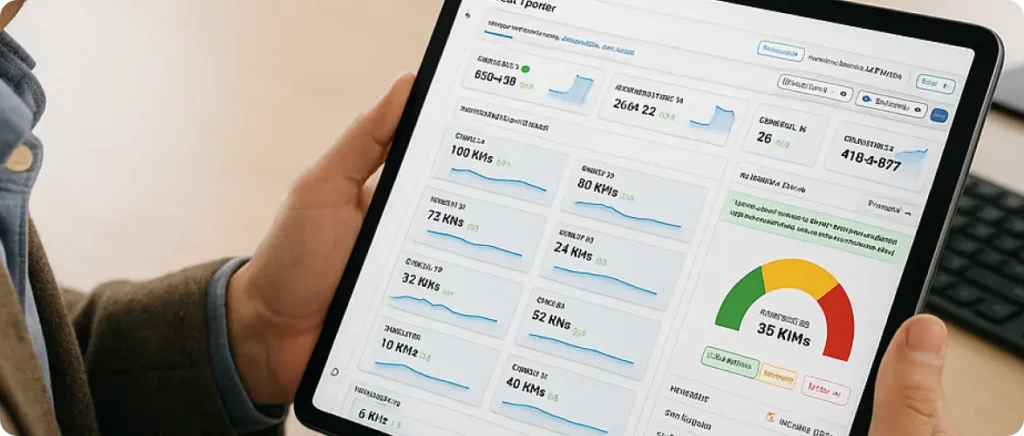
Infigrowth, our proprietary platform, brings AI SEO services directly into how we build and optimise Webflow sites, tracking AI Overview visibility, keyword opportunities, and technical health in one place, so decisions are guided by live data rather than guesswork.

Recognised with 100+ industry awards, including Agency of the Year honours across multiple categories, our track record reflects consistent, measurable delivery across SEO, content, and web development, not a single standout campaign built around one client.

A 180-strong team of SEO specialists, content strategists, and developers works cross-functionally on every single project, meaning your Webflow build benefits from real search expertise from day one rather than SEO being bolted on after launch.

Every recommendation traces back to real data: rankings, traffic, user behaviour, and conversion rates, not assumptions about what should work. Progress gets measured against clear benchmarks, so improvements to your Webflow site are provable, not just promised.

As an established Webflow development company, we bring years of hands-on build experience across industries, from ecommerce to BFSI, translating into fewer surprises, faster delivery, and a build process refined through genuine trial and error, not theory.

No black-box reporting. You get clear visibility into what was done, why it was done, and what it changed, through regular reports covering rankings, traffic, technical fixes, and site performance, in language a business owner can actually act on.
Case studies
We create success stories like these for your brand
How Sutsnax Transformed Its Brand & Digital Presence for Global Automotive OEMs
Objective
How Sutsnax Transformed Its Brand & Digital Presence for Global Automotive OEMs
Challenges
– Transition from Aspireli to Sutsnax without losing OEM trust
– Communicate complex OEM, R&D & technology capabilities clearly
– Build a corporate site, Metlux microsite & interactive 3D configurator
Solutions
– Brand strategy workshops & capability-led content architecture
– Industrial-future design with dynamic typography & modular layouts
– Unified Webflow ecosystem: Corporate site + Metlux + 3D configurator
Results
Higher Engagement
Increased time spent on Capabilities & Quality pages
Stronger OEM Positioning
Clear innovation-led brand narrative
Transforming OEM Accessory Evaluation with a Real-Time 3D Product Configurator
Objective
To build a real-time, browser-based 3D configurator that allows OEM stakeholders to easily visualize and evaluate different vehicle accessory combinations.
Challenges
– Static PDFs and 2D renders made comparisons difficult
– Teams struggled to visualize full accessory combinations
– Feedback loops were slow due to repeated render requests
Solutions
– Real-time 3D vehicle viewer
– Component-level toggles (body kits, trims, decals, badges)
– Built using Babylon.js and Three.js for rendering
Results
Faster Decision-Making
Reduced dependency on static renders and redesign cycles
Improved OEM Experience
Instant comparison of accessory combinations in 3D
Transforming Ophthalmology Education with a Visually Distinctive Landing Page
Objective
Design a premium, conversion-focused landing page that elevates academic credibility and drives registrations.
Challenges
– Communicating authority without overwhelming content
– Differentiating from typical medical conference websites
– Structuring dense information clearly across devices
Solutions
– Strong faculty spotlight with clear visual hierarchy
– Legacy metrics, past editions, and real event imagery
– Strategically placed “Secure Your Spot” CTAs
Results
Stronger Registration Intent
Clear value communication increased conversion confidence
Higher Engagement Depth
Motion-led sections improved scroll interaction
Elevating Teapigs’ Website Accessibility with Technical Expertise
Objective
Design and develop a Shopify website that meets WCAG standards and ensures inclusive access for all users.
Challenges
– Customizing a Shopify theme for full accessibility compliance
– Creating intuitive navigation for diverse user needs
– Ensuring accessible forms and input interactions
Solutions
– Implemented WCAG-compliant design and development standards
– Optimized screen reader compatibility with semantic code and alt text
– Enabled full keyboard-friendly navigation
Results
Improved Accessibility Compliance
Website aligned with WCAG standards and inclusive best practice
Enhanced User Inclusivity
Seamless browsing for users relying on assistive technologies
High-Performance Bilingual Website for a Global Security Brand
Objective
Build a fast, scalable bilingual WordPress platform with a dynamic pricing simulator for global audiences.
Challenges
– Merging three legacy websites into one unified platform
– Managing fully bilingual (English–Korean) content delivery
– Developing a complex, security-plan pricing simulator
Solutions
– Built scalable WordPress architecture with custom post types
– Implemented seamless bilingual content management
– Developed a custom dynamic pricing simulator
Results
Unified Global Platform
Merged multiple properties into one cohesive websit
Enterprise-Grade Performance
High page-speed and SEO alignment strengthened brand trust
Process
Our Webflow Development Process
Requirement and Goal Analysis
Every build starts with questions, not design software. What is the website actually meant to do: generate leads, support ecommerce, showcase a portfolio, or manage a growing content library? Who is the target audience, and what does success look like six months after launch?
These answers shape every decision that follows. A lead-generation site needs different page priorities than a content-heavy publication, and a business selling products needs CMS and checkout considerations a static portfolio never will. Getting this foundation right before any design work begins is what keeps the finished website aligned with actual business goals, not just visual preference.
Sitemap and CMS Planning
Before any visual design begins, the site’s structure needs a plan: page hierarchy, navigation flow, and how CMS Collections will hold blogs, case studies, products, or team profiles. Skip this step, and the CMS tends to sprawl unpredictably once real content starts flowing in.
Good planning defines field types, reference relationships between collections, and how new content types will slot in as the business grows. Paired with well-structured content writing services, this groundwork means editors can add a blog post or a new case study months later without breaking navigation or duplicating fields that should have been unified from the start.
UX Wireframe Creation
Wireframes strip away colour and styling to focus on something more important first: where does the eye go, and what happens next? Section order, form placement, menu structure, and call-to-action positioning all get mapped before a single pixel is polished.
This matters because a beautiful page with a poorly placed enquiry form still underperforms. Wireframing forces a clear-eyed look at the actual path a visitor takes from arrival to action, so the final design supports genuine browsing and conversion rather than looking good in isolation, disconnected from how people actually move through a page.
Custom Webflow Design
Templates are a starting point; brand identity is what actually builds trust. Custom design work covers layout, colour palette, typography, visual hierarchy, and purposeful animation, all shaped around how a specific business wants to be perceived rather than a generic theme.
This is where Webflow design and development services genuinely earn their name, translating brand guidelines into a cohesive visual language across every page, not just the homepage. Small details, consistent spacing, considered motion, a typeface that actually matches the brand’s tone, compound into a site that feels deliberate rather than assembled from stock components.
Webflow Development and Interactions
Approved designs move into Webflow itself, built with reusable components, clean class structures, and interactions that respond to scroll, hover, and click without bloating page weight. This is technical execution, not just translation from a design file.
An experienced Webflow development agency builds these interactions deliberately: subtle enough to feel polished, restrained enough not to slow the page down. Custom code fills any gaps native components cannot reach, while responsive behaviour is tested across breakpoints as the build progresses, not left as an afterthought once development is finished.
Migration and Integrations
Moving an existing site to Webflow carries real risk if handled carelessly: lost URLs, broken redirects, or dropped SEO equity built up over years. A careful migration maps every existing page to its new equivalent and sets up 301 redirects before the old site goes offline, not after.
Integrations follow the same careful approach. CRMs, analytics platforms, marketing automation tools, and payment gateways all need to connect cleanly, so the business does not lose functionality it already relies on. Done properly, migration becomes invisible to visitors and search engines alike, while unlocking everything Webflow offers going forward.
SEO, Speed and Mobile Optimization
A fast, well-designed site still needs technical SEO services underneath it to actually get found. This stage covers metadata across every page, image compression, alt text, clean URL structures, and Core Web Vitals, the concrete technical work that determines how Google actually ranks a page, not just how it looks.
Our SEO audit services run alongside this build stage, checking crawlability, indexation, and mobile performance before launch rather than discovering issues afterwards. Mobile optimisation gets equal weight here too, since a slow or awkward mobile experience quietly erodes both rankings and conversions regardless of how the desktop version performs.
Testing, Launch and Support
Before launch, every form gets tested, every link gets clicked, and every page gets checked across browsers and devices for anything that slipped through earlier stages. Analytics tracking, CMS behaviour, and site speed all get verified under real conditions, not just in a design preview.
Launch is not the finish line. Ongoing Webflow development services should include ongoing support: monitoring performance, fixing issues as the business evolves, and refining pages based on real user behaviour once traffic starts arriving. A site that gets better after launch, rather than sitting untouched, is what actually compounds value over time.
Testimonials
Our clients talk about their transformative growth journeys with us.




Seo Growth
Why Are Webflow SEO Services Important for Business Growth?
A beautiful website that nobody finds is not a growth asset. It is a portfolio piece. The gap between a well-designed Webflow site and one that actually drives revenue almost always comes down to whether Webflow development services were built to be discovered, not just admired.
Clean page structure matters more here than most people assume. Webflow’s semantic HTML gives search engines a clear map of what each page is about, but that only helps if heading hierarchy, internal linking, and metadata are actually built with intent rather than left at default. CMS-driven pages, blogs, case studies, and product listings need the same rigour. A collection template with thin content or duplicate metadata across hundreds of pages can quietly cap a site’s visibility no matter how well the homepage performs.
Structured data adds another layer entirely. Schema markup tells search engines and AI platforms exactly what a page represents: a service, a product, a review, an article, rather than leaving that interpretation to guesswork. This matters more now than it did even two years ago. Google’s AI Overviews and tools like ChatGPT and Perplexity increasingly pull information from structured, clearly labelled content when generating answers, which means a site optimised for local SEO services in a specific city or region has a real shot at being cited directly in an AI-generated response, not just ranked on page one.
The commercial case varies by business model. A Webflow store built on ecommerce SEO services needs optimised product schema, category pages, and clean URL structures to compete for purchase-intent searches. A B2B site relies more heavily on LLM SEO services and content built to answer specific buyer questions in depth, since that is exactly the format conversational search tools reward.
None of this replaces good design. It builds on it. A visually strong site with weak SEO foundations still struggles to generate organic traffic, qualified leads, or brand visibility beyond people who already know the business exists. Get both right, though, and the outcome shifts: stronger organic rankings, better lead quality because visitors arrive already searching for exactly what is offered, and growing visibility inside the AI-driven search experiences shaping how people find businesses next. A Webflow site built this way stops being a static asset and starts compounding in value the longer it stays live.
solutions
Explore Our Comprehensive Suite of Digital Growth Solutions
SEO
Improve search visibility for steady growth
LLM SEO
Optimize for AI search visibility
AI SEO
Smarter SEO with AI insights
E-commerce SEO
Boost product visibility and sales
CRO
Increase conversions from existing traffic
SEO Audit
Get found in local searches
Local SEO
Get found in local searches
Small Business SEO
SEO that helps small businesses grow faster
Enterprise SEO
Scale SEO across large websites
ASO
Increase app visibility and install growth
Website Development
Build fast, scalable websites for growth
Content Writing
Drive organic growth with strategic content
The team is very proactive and adheres to the timeline, while also, the team members have a never say no attitude. It has been a good collaboration so far.

Supriya Layek
Manager: Digital Marketing - Myntra
FAQs
FAQs about Webflow Development Services
What Makes Your Webflow Development Services Unique?
Our Webflow development services combine design, development, and SEO services under one roof, rather than treating them as separate workstreams handled by different teams. Most agencies build a site and hope it ranks. We build with search visibility, conversion architecture, and technical performance considered from the very first wireframe, backed by Infigrowth’s AI-driven insights into what is actually working in search right now. That means fewer post-launch surprises: no discovering months later that the CMS structure cannot scale, or that metadata was never properly configured. Clients get a website built to generate leads and rank well simultaneously, not a beautiful site that needs a second team to fix its SEO afterwards.
Do You Only Work with Webflow Development?
No, Webflow is one platform we build on, chosen when its strengths speed, visual flexibility, CMS capability fit the client’s needs, but our core expertise sits in the SEO, content, and conversion strategy that underpins all our Webflow development services and applies across platforms. This matters because the recommendation to use Webflow should come from what the business actually needs, not from an agency only knowing one tool. We also work across WordPress, Shopify, and custom-built websites, which means the technical and SEO strategy behind a project stays consistent regardless of the platform, and Webflow gets recommended specifically when it is genuinely the right fit, not the default answer.
Can I Build My Website on Webflow Myself, or Do I Need to Hire a Professional?
Technically, yes, Webflow’s visual builder is designed to be approachable without code. Realistically, it depends on what you are trying to achieve. Building a simple site with basic pages is entirely doable solo, and Webflow’s own tutorials cover the fundamentals well. Custom interactions, CMS architecture that scales cleanly, SEO-correct technical setup, and integrations with existing business tools involve a steeper learning curve, and mistakes here are harder to spot than they are to prevent. A professional brings the experience to avoid structural issues that only surface months later, when fixing them costs far more time than building it correctly from the outset would have.
Can you migrate my existing site to Webflow without downtime?
Yes, our Webflow development services plan every migration specifically to avoid downtime or lost visibility. Before anything moves, every existing URL gets mapped to its Webflow equivalent, and 301 redirects are configured and tested ahead of the actual switch. Content, images, and metadata are transferred and checked for accuracy rather than assumed to have copied correctly. The old site typically stays live until the new one is fully tested and verified, and the DNS switch happens during low-traffic hours to minimise any disruption. Search engines are also notified through updated sitemaps post-migration, so existing rankings and organic traffic carry over rather than resetting from zero.
What is the cost of Webflow Development Services?
Cost depends on scope: a straightforward brochure site costs considerably less than a CMS-heavy build with custom integrations, ecommerce functionality, or complex interactions. Factors like the number of unique page templates, CMS collection complexity, migration requirements, and how much custom code and animation work is involved all shift the final number. Rather than quoting a flat rate that fits every business, a proper proposal for Webflow development services agency work follows an initial requirements discussion, so pricing reflects the actual build rather than a generic package. This ensures the investment matches what the project genuinely requires, not an estimate based on guesswork.
Is Webflow suitable for enterprise or high-traffic websites?
Yes, with the right architecture behind it. Webflow’s CMS handles large content volumes well when collections are structured properly from the start, and the platform’s hosting infrastructure scales to handle significant traffic without the server management overhead traditional hosting requires. Large organisations running multiple regional pages, extensive product catalogues, or high-traffic campaigns benefit particularly from pairing enterprise-grade Webflow development services with enterprise SEO planning, since visibility needs to be managed consistently across dozens or hundreds of pages rather than a handful. The platform itself is not the limiting factor for enterprise use; proper planning, structure, and technical execution are what determine whether it performs at scale.

- Your data is properly secured encrypted by SSL.
- We hate spam too, your inbox is safe with us.
How useful was this post?
0 / 5. 0