







Home > Case Study > Website Development Case Studies > Hoonartek Website Development Case Study
How Infidigit Helped Hoonartek Boost Average Engagement time by 51% with a Scalable Website Revamp

The Client
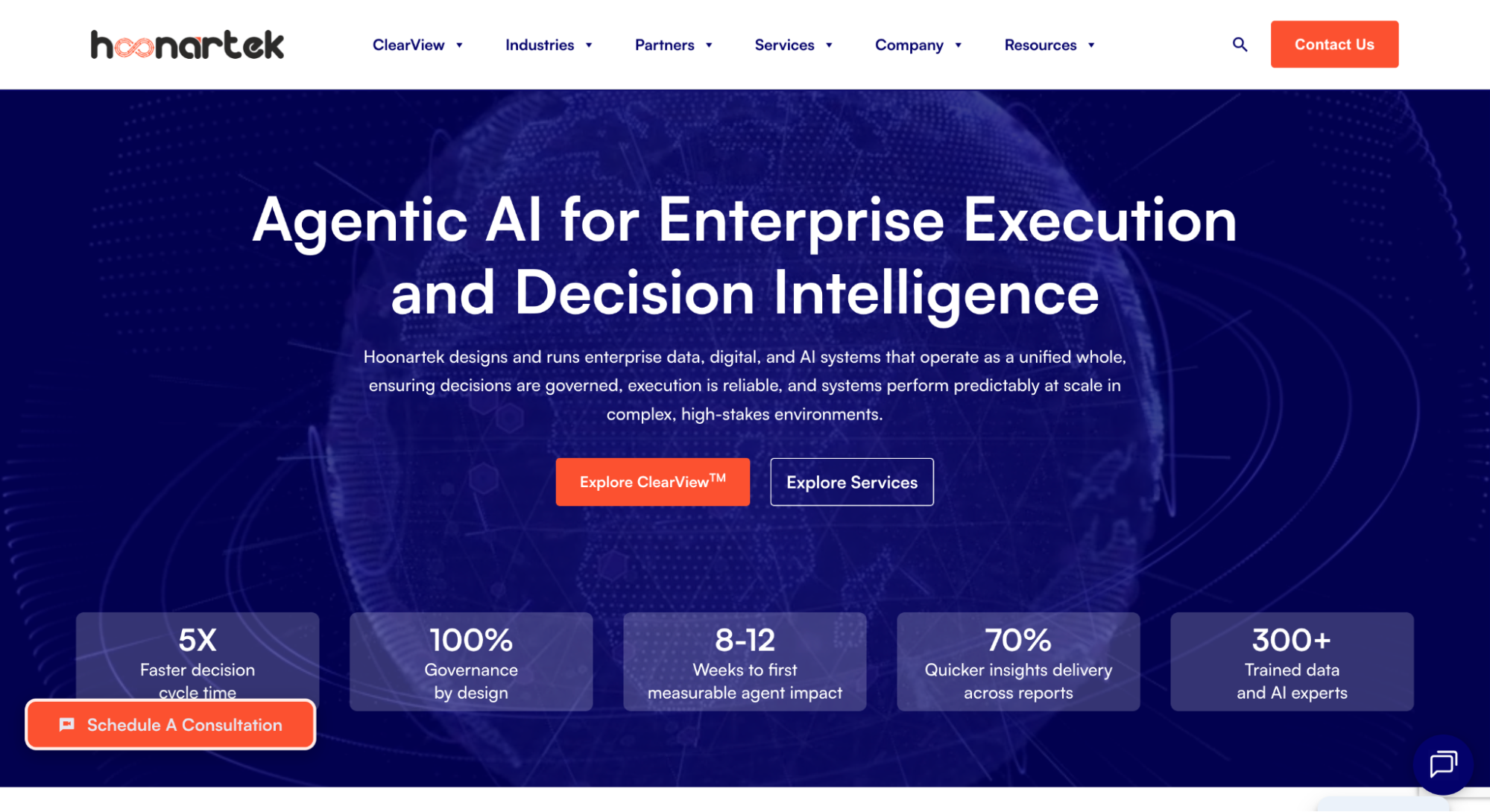
Hoonartek is a global digital engineering and technology services company offering technology solutions across multiple industries. As its portfolio of services, solutions, industries, case studies, and resources continued to grow, its website needed to evolve into a more scalable and user-centric digital platform.
The project focused on revamping and redeveloping the Hoonartek website with an emphasis on user experience, responsive design, structured content management, scalability, maintainability, and technical SEO.
The Objective
The primary objective was to transform the existing website into a modern, responsive, dynamic, and scalable digital platform.
The key objectives included:
- Improve overall website usability and user experience.
- Simplify information architecture and navigation.
- Improve content discoverability and user journeys.
- Provide a consistent experience across desktop, tablet, and mobile devices.
- Build a structured and scalable content management architecture.
- Reduce dependency on developers for routine content updates.
- Introduce reusable components and dynamic templates.
- Establish a technically sound, SEO-friendly website architecture.
- Create a foundation that can support future content and business expansion.
The Challenge
The existing website had challenges from both a UX and technical perspective.
As the amount and variety of website content increased, managing individual pages independently became less scalable. The website also required improvements in navigation, content hierarchy, responsiveness, content management, and SEO architecture.
The major challenges included:
- Complex website structure and content hierarchy.
- Difficulty discovering relevant services, solutions, industries, and resources.
- Inconsistent experiences across different screen sizes.
- Requirement for reusable page components and templates.
- Limited scalability for managing different content types.
- Need for better structured content relationships.
- Requirement for stronger crawlability, internal linking, metadata, and page structure.
- Need for an architecture that could accommodate future content without significant redevelopment.

Rupesh Shinde 
AVP Marketing at Hoonartek

The Solution
1. User-Centric & Responsive Website Development
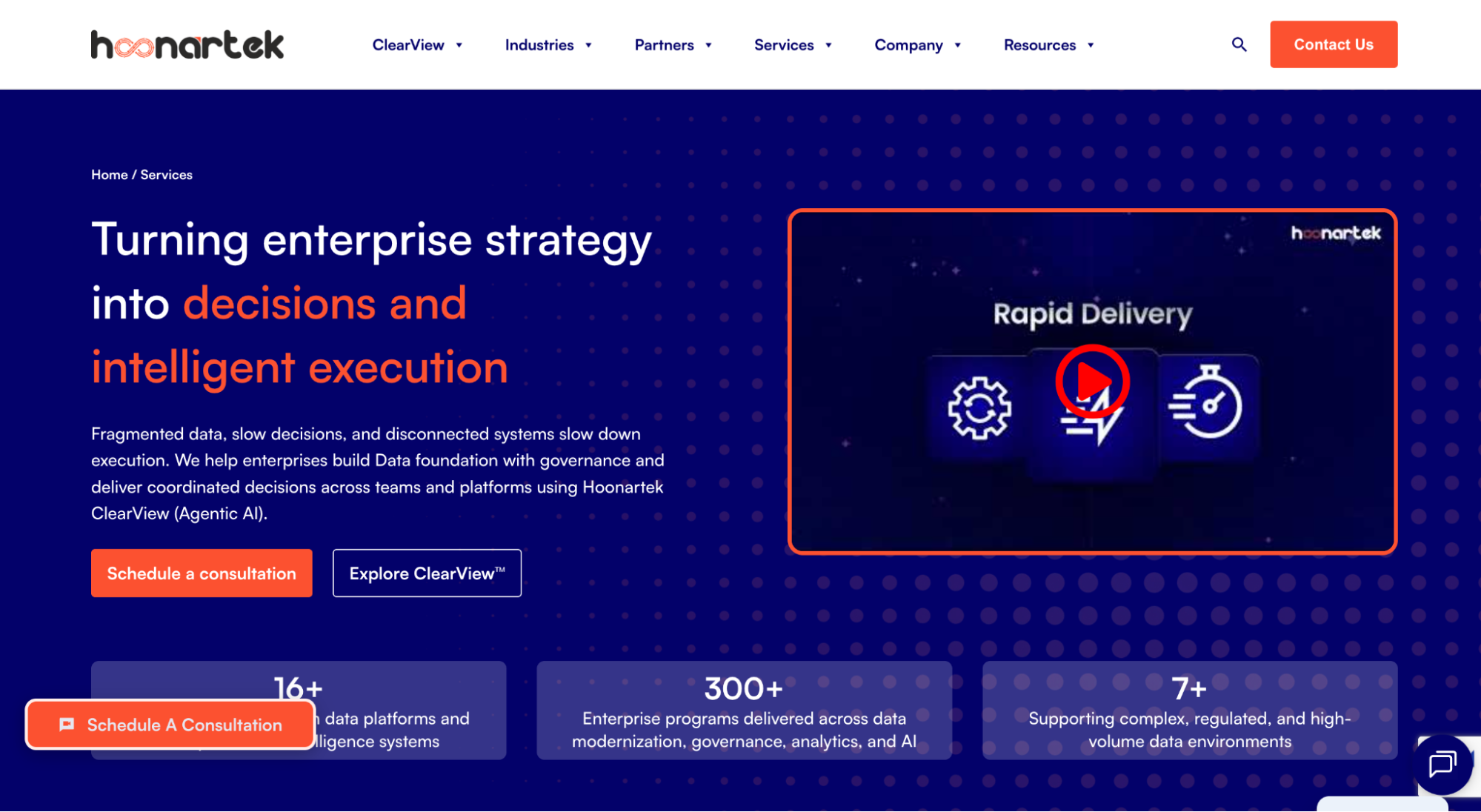
The website was redesigned with a focus on usability, content hierarchy, readability, and consistent user journeys.
The frontend was developed to provide a seamless experience across:
- Desktop
- Laptop
- Tablet
- Mobile
Responsive behaviour was implemented across navigation, layouts, typography, images, forms, CTAs, interactive elements, spacing, and alignment. The objective was to ensure that the experience was optimized for each breakpoint rather than simply scaling down the desktop design.
2. Dynamic Content Architecture Using Custom Post Types
A structured WordPress content architecture was implemented using Custom Post Types (CPTs).
This allowed different content entities to be managed independently, including:
- Case Studies
- Blogs
- Events
- Resources
- Press Releases
- Services
- Solutions
- Industry-specific content
Instead of creating every page independently, content could be created within the CMS and automatically rendered through predefined templates.
This provided centralized content management, consistent page structures, reusable templates, easier content scalability, and reduced dependency on developers for repetitive page creation.
3. Dynamic & Reusable Templates
The website was developed using reusable components and dynamic templates.
Common components included:
- Header and navigation
- Footer
- Hero sections
- CTA sections
- Content blocks
- Service sections
- Solution sections
- Case Study components
- Resource listings
- Related-content sections
This component-based approach improved consistency and maintainability while allowing global changes to be implemented at the component or template level instead of modifying individual pages manually.
4. Improved Information Architecture & Navigation
The website’s information architecture was restructured around key user journeys.
The content hierarchy was organized around:
Services → Solutions → Industries → Resources → Company → Conversion
This created clearer navigation paths, improved content discovery, reduced navigation complexity, and provided stronger internal linking opportunities for both users and search engines.
5. Technical SEO Foundation
SEO considerations were incorporated directly into the website development architecture.
Key implementations included:
- Proper H1–H6 heading hierarchy.
- SEO-friendly page structures.
- Clean URL architecture.
- Meta title and description support.
- Crawlable HTML content.
- Structured content templates.
- Internal linking architecture.
- Mobile-friendly implementation.
- Search-engine-friendly navigation.
- Dynamic SEO management for content-driven pages.
The structured architecture also enables relationships between different content types, such as:
Service → Solution → Industry → Case Study → Resource
This creates contextual pathways for users while helping search engines better understand the relationship between website content.
6. Scalability & Maintainability
The new architecture was designed so that new content could be published using existing templates.
For example: Create Case Study → Populate Required Fields → Publish → Automatically Render Using Existing Template
This eliminates the need to develop a new page from scratch for every new case study or content item and significantly improves long-term maintainability.
The Result
The Hoonartek website revamp resulted in a modern, scalable, dynamic, and technically structured digital platform.
50.96% – Increase Average Engagement time
Average engagement time on the website increased from 34.40 seconds (March 2026, pre-launch) to 52.20 seconds (April 2026, post-launch) — a 50.96% increase, reflecting the impact of the improved navigation, content structure, and overall user experience.
Improved User Experience
A cleaner information architecture and intuitive navigation make it easier for users to discover relevant services, solutions, industries, resources, and company information.
Fully Responsive Experience
The website provides a consistent and optimized experience across desktop, tablet, and mobile devices.
Dynamic Content Management
Custom Post Types provide a structured approach for managing different content types while reducing dependency on developers.
Reusable & Scalable Architecture
Reusable components and dynamic templates make it easier to create and maintain new pages and content.
Improved Content Discoverability
The restructured navigation and internal linking architecture provide clearer pathways between related content.
Stronger SEO Foundation
The new architecture supports crawlability, structured content, clean URLs, internal linking, metadata, and future organic search initiatives.
Better Maintainability
Centralized content structures and reusable templates reduce repetitive development effort and make future website updates more efficient.
Improvement in Average Engagement time
The Conclusion
The Hoonartek website redevelopment was more than a visual redesign. It was a complete transformation of the website’s UX, content architecture, development framework, responsiveness, scalability, and technical SEO foundation.
By combining WordPress Custom Post Types, dynamic templates, reusable components, responsive development, improved information architecture, structured content, and technical SEO, the website was transformed into a flexible digital platform capable of supporting Hoonartek’s ongoing content and business requirements.
The new architecture provides Hoonartek with a stronger foundation for future website expansion while making content management more efficient, user journeys clearer, and the overall digital experience more scalable and maintainable.
60+
Client Testimonial
200+
Global Brands
70+
Awards & Recognition
130+
Success Stories




- Your data is properly secured encrypted by SSL.
- We hate spam too, your inbox is safe with us.
How useful was this post?
0 / 5. 0