










Organic Search
Platforms
Overview
Driven by Results
We have a achieved outstanding growth for brands in various industries
+3.1B
Total Organic Sessions
+1.9B
Total Organic Clicks
+1.24B
Total Organic User Acquisiton
Content & Outreach
Design & Develop
Industries & Platform
Schemas and Calculators
Plans
USP
Why Choose Us?


Winners
Great Place to Work
For two consecutive years, we are awarded by this honour

By Service
Results
Our Proven Results


The client is a major global airline with a broad international and domestic flight network. The airline’s website serves as the primary digital touchpoint for flight search, booking, and customer engagement. The website already had strong brand recognition, but organic discovery through search engines and AI platforms remained an area for growth.
The core objective was to significantly boost non-brand organic traffic and visibility in an increasingly AI-driven search environment. Specifically, the goals were:
This objective reflects the evolving landscape of search, where traditional ranking improvements are complemented by visibility within AI-augmented search and discovery ecosystems.
The campaign faced several key hurdles unique to the airline’s digital ecosystem:
Traditional SEO is about ranking; AI optimization is about being the answer. We realized that AI tools look for different things than standard search engines. Our new goal is to make sure our content is authoritative enough that AI tools cite us as the source, rather than just scanning our text
Google’s AI Overviews (the AI-generated summaries that appear for certain queries) frequently shift which keywords trigger AI summaries. High-intent travel keywords also compete for placement within AI Overviews, often favoring concise data points over long-form content.
With routes specific pages (e.g., flights from various cities to various cities), there was a risk of similar versions of the same route competing against each other in search results, diluting visibility and click potential.
The airline’s existing CMS presented technical constraints that slowed the adoption of automated internal linking and bulk removal of outdated or low-value pages. These limitations could negatively impact crawl efficiency and content freshness.
Technical issues such as broken links, scattered internal authority, and sub-optimal meta data were creating friction for both search crawlers and AI agents looking to interpret and recommend the content.
To address these challenges and achieve the objective, a comprehensive LLM-optimized SEO strategy was implemented. This strategy combined content enrichment, structured data, technical hygiene, and semantic organization to align both traditional SEO and generative search needs.
We revitalized core route pages by blending high-utility travel data (flight schedules, timetables) with human-written narratives about destinations. This created the “semantic depth” LLMs use to determine topical authority. Human nuance satisfies quality content guidelines, while structured factual data offers grounding for AI systems.
Benefits: Increased engagement, enhanced topical relevance, and stronger citations in AI outputs.
We introduced structured FAQs that reflect natural language user queries tied to flight planning (e.g., baggage rules, layovers). Modular FAQ blocks were designed so that LLMs could easily extract and surface answers.
Benefits: Higher likelihood of appearing in AI “People Also Ask” features and AI-generated summaries.
Specialized schema markup — including FAQ, How-to, and flight-specific structured data — was deployed across the website. Schema makes content machine-readable, improving the context and interpretation of pages by both search engines and LLMs.
Benefits: Richer search snippets and more efficient crawling.
We systematically launched new route-specific pages to capture long-tail, high-intent queries that were previously unaddressed.
Benefits: Expanded visibility footprint and opportunities to capture early-stage search intent.
Sophisticated internal linking was implemented to connect related content (for example, linking travel guides to specific route pages). This created a logical content network that guides both users and crawlers.
Benefits: Enhanced crawl depth and stronger contextual relationships across topics.
A full audit corrected broken links and removed redirect chains. Cleaner technical structure ensured that crawler budget was spent on active, relevant pages.
Benefits: Smoother crawling and improved reliability signals to search engines.
Meta titles and descriptions were rewritten to be more descriptive and click-oriented. While LLMs use body content heavily, meta tags still influence ranking click-through signals and can act as concise summaries for automated tools.
Benefits: Higher SERP click-through rates and clearer page intent signaling.
We monitored and engaged in relevant discussions on platforms like Quora and Reddit to understand real user questions and conversational language that LLMs increasingly rely on when generating answers. By analyzing frequently asked questions and common phrasing from these communities, we informed our content creation, expanded our FAQ topics, and ensured our site reflected authentic user intent
Benefits: Quora and Reddit are rich sources of genuine user queries and conversational patterns that large language models often reference when answering natural language questions. Participation and insight-gathering from these platforms helped us uncover real-world search intent and long-tail phrasing that improved our content’s alignment with LLM retrieval logic
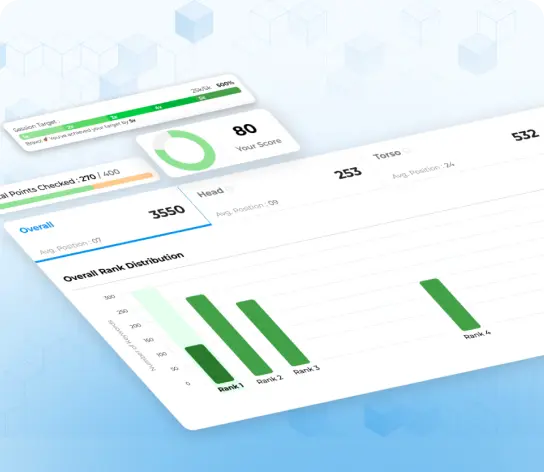
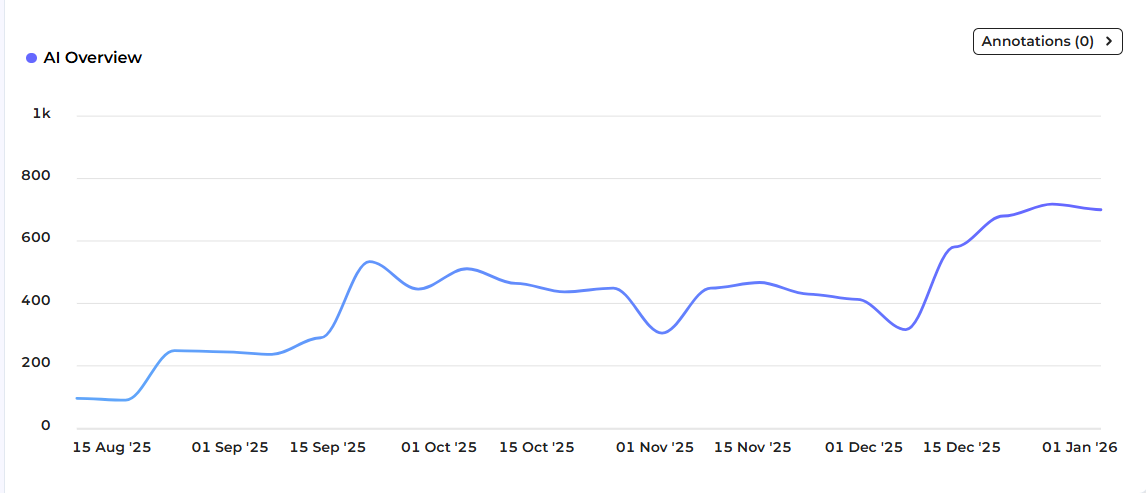
To measure and monitor our performance specifically in AI Overview (AIO) visibility, we used our in-house analytics platform, Infigrowth. Infigrowth is an AI-powered SEO intelligence suite that helps digital teams track keyword rankings, search trends, and organic visibility — including how frequently our content appears in AI-generated overviews and LLM-driven response surfaces.
With Infigrowth, we were able to:
Analyze keyword performance, search trends, and large-language-model impact metrics in a unified dashboard. This helped us refine our content strategy and focus on topics most likely to be referenced by conversational systems.
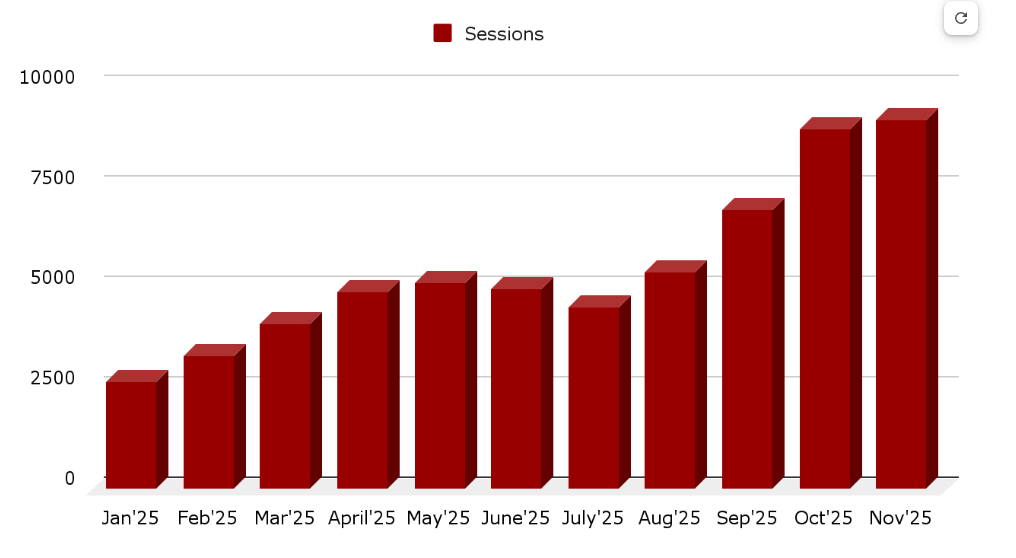
Organic Traffic Growth
3.5x
Improvement in Overall Organic Sessions
Demonstrating Broad Discovery Growth.Flight Search Engagement
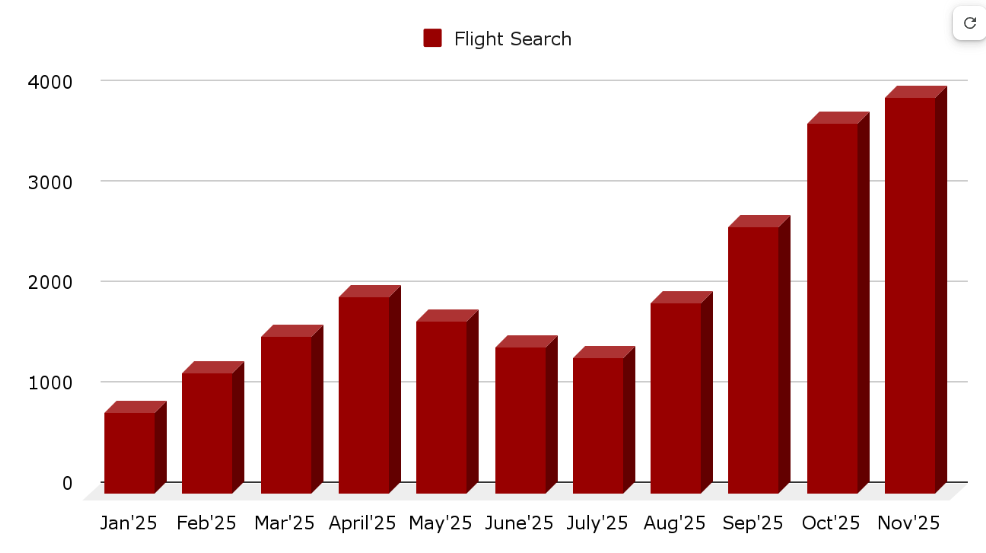
5x
Improvement in Flight Search Engagements
Showing Deeper Funnel Action.Conversion Growth
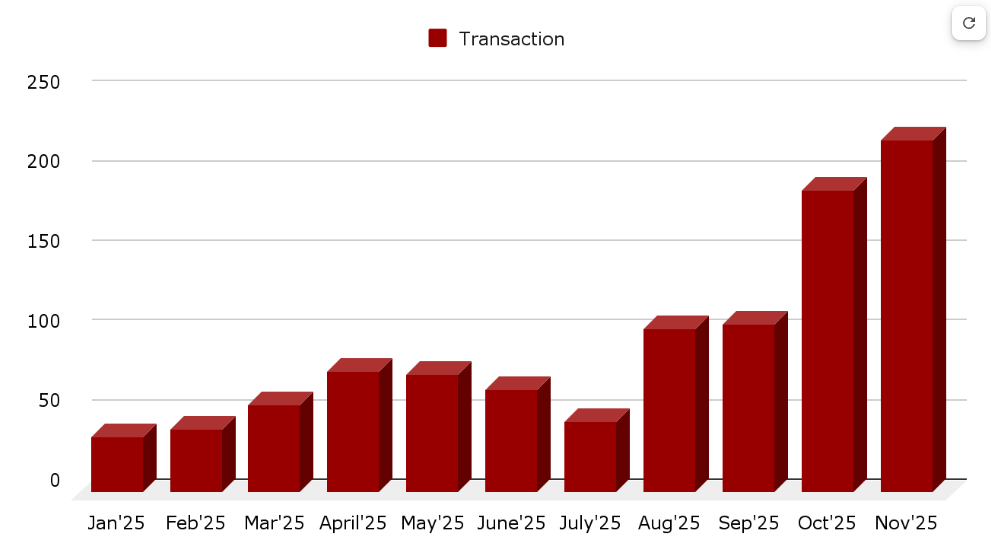
5x
Improvement in Transactions
Highlighting Quality Traffic Capture.Revenue Impact
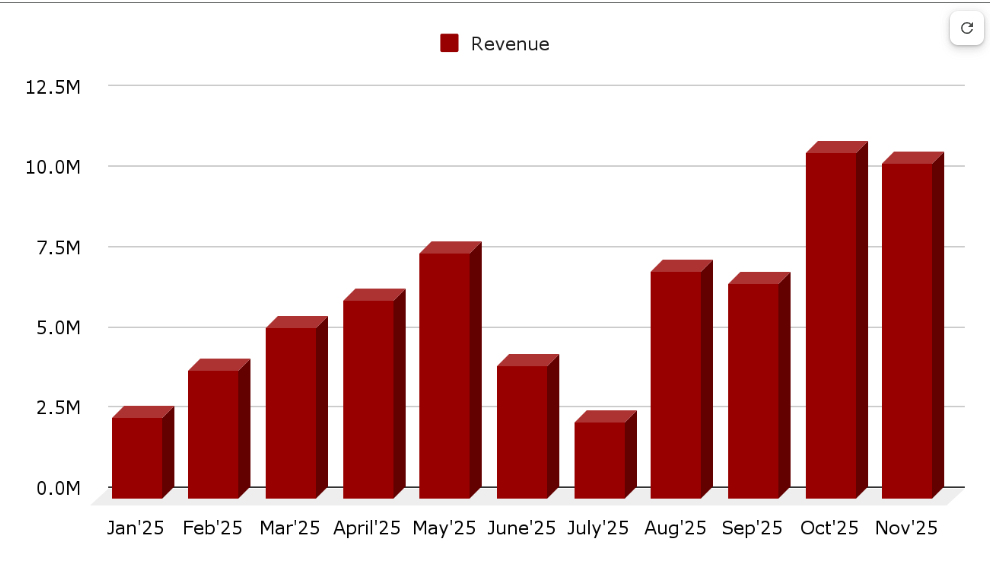
3x
Improvement in Organic Revenues
Underscoring Business Impact.AI Overview (AIO) Keyword Growth
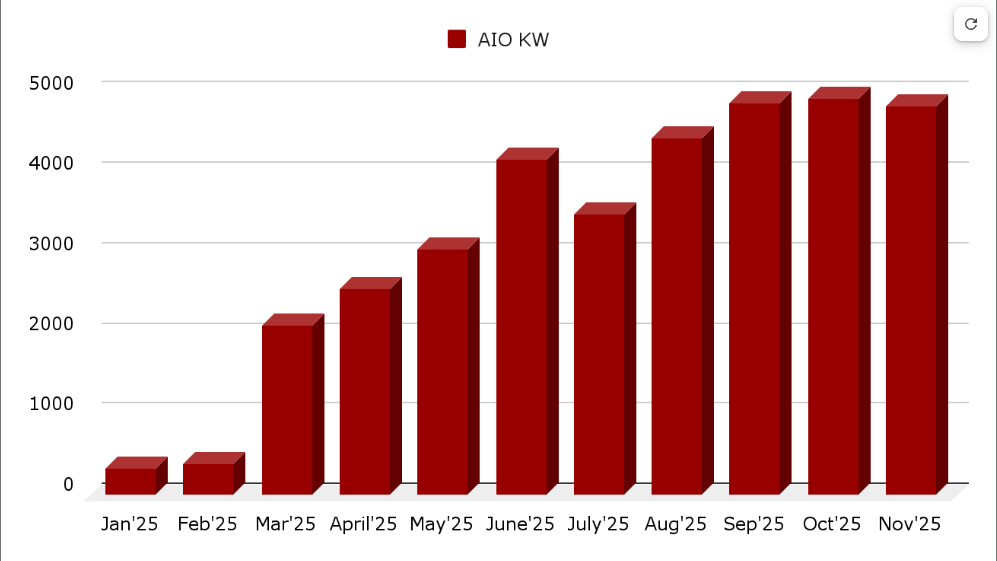
13x
Improvement in AI Overview Keywords
Indicating Strong Traction in AI-driven Search Surfaces.Infigrowth
These results demonstrate how an LLM-aware SEO strategy can elevate both visibility and business outcomes by addressing both modern AI discovery behavior and classic SEO fundamentals
Client Testimonial
Global Brands
Awards & Recognition
Success Stories
Beauty & Fitness
Health
Our Solutions
How useful was this post?
0 / 5. 0
| Cookie | Duration | Description |
|---|---|---|
| cookielawinfo-checkbox-analytics | 11 months | This cookie is set by GDPR Cookie Consent plugin. The cookie is used to store the user consent for the cookies in the category "Analytics". |
| cookielawinfo-checkbox-functional | 11 months | The cookie is set by GDPR cookie consent to record the user consent for the cookies in the category "Functional". |
| cookielawinfo-checkbox-necessary | 11 months | This cookie is set by GDPR Cookie Consent plugin. The cookies is used to store the user consent for the cookies in the category "Necessary". |
| cookielawinfo-checkbox-others | 11 months | This cookie is set by GDPR Cookie Consent plugin. The cookie is used to store the user consent for the cookies in the category "Other. |
| cookielawinfo-checkbox-performance | 11 months | This cookie is set by GDPR Cookie Consent plugin. The cookie is used to store the user consent for the cookies in the category "Performance". |
| viewed_cookie_policy | 11 months | The cookie is set by the GDPR Cookie Consent plugin and is used to store whether or not user has consented to the use of cookies. It does not store any personal data. |