









What is Digital Marketing?
What types of digital marketing are best for your business?
With so many online marketing tools available, choosing the right ones for your business is crucial. To help you decide what digital marketing strategy is best for your brand, here are a few questions you should consider before making an informed decision:
- What is your ultimate business goal?
- What is your budget for digital marketing?
- Do you have a clear and consistent brand voice?
- Where do you see your business’s digital presence in the next five years?
By answering these questions, you can make the best decision about which digital marketing strategies will effectively promote your business and help you stand out in the digital world.
10 Types of Digital Marketing
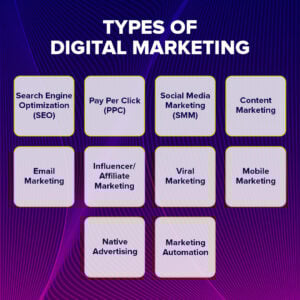
Digital Marketing is divided majorly into 10 types. Here is the list of various types of digital marketing you should be aware of:
- Search Engine Optimization (SEO)
- Pay Per Click (PPC)
- Social Media Marketing (SMM)
- Content Marketing
- Email Marketing
- Influencer/ Affiliate Marketing
- Viral Marketing
- Mobile Marketing
- Native Advertising
- Marketing Automation
1. Search Engine Optimization (SEO)
Search Engine Optimization (SEO) is a digital marketing strategy aimed at enhancing a website’s visibility on search engines like Google. By optimizing various website elements such as content, keywords, links, and technical performance SEO helps attract organic (unpaid) traffic from users searching for relevant information. It includes both on-page strategies (like optimizing content with the right keywords) and off-page tactics (such as building quality backlinks from other websites). With effective SEO, businesses can rank higher on search results, increase their online presence, and connect with potential customers when they’re actively searching for products or services.
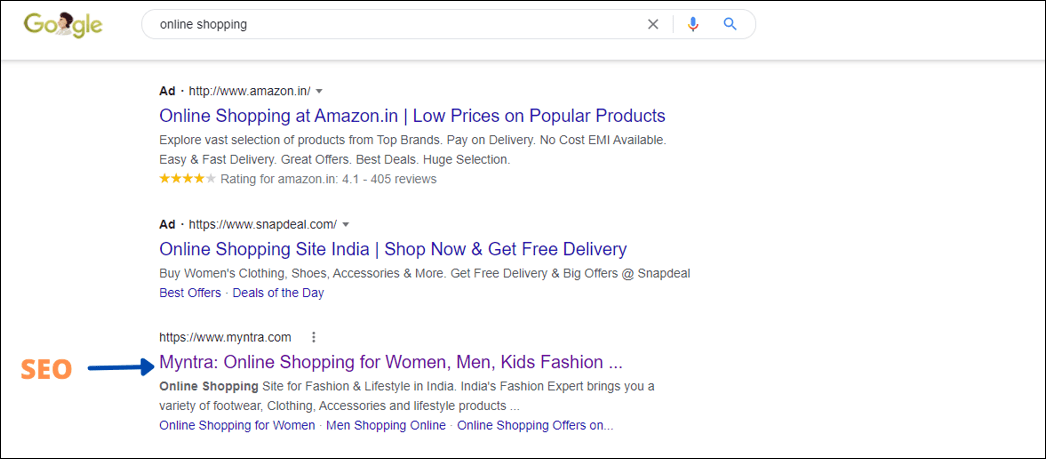
Key SEO Techniques
Effective SEO relies on a variety of techniques to improve a website’s ranking. Key techniques include:
- Keyword Research: Identifying relevant search terms for your target audience.
- On-Page Optimization: Using keywords strategically in titles, headers, and content.
- Technical SEO: Enhancing site speed, mobile-friendliness, and crawlability.
- Link Building: Acquiring quality backlinks from reputable websites.
- Content Creation: Developing valuable and relevant content that engages and informs users.
- User Experience (UX) Optimization: Ensuring easy navigation and a positive user experience.
Benefits of SEO for Digital Marketing
SEO provides numerous advantages, making it a vital component of digital marketing:
- Increased Organic Traffic: Attracts targeted traffic from users actively searching for your products or services.
- Improved Brand Awareness: Higher search rankings boost visibility and help people recognize your brand.
- Enhanced Credibility and Trust: Users trust websites that rank highly on search results.
- Long-Term Results: SEO provides lasting traffic and visibility, unlike paid ads.
- Cost-Effective: SEO offers high ROI by reducing reliance on paid advertising.
- Better User Experience: Optimizing your site improves navigation, speed, and accessibility, leading to higher engagement.
2. Pay Per Click (PPC)
Pay Per Click (PPC) is a digital advertising model where businesses pay a fee each time their ad is clicked. Typically used in search engine advertising (e.g., Google Ads), businesses bid on keywords relevant to their products or services. When a user searches for these keywords, ads appear at the top or side of the search results. PPC allows businesses to target specific demographics and track ad performance in real-time, ensuring optimal ad spend. It’s an effective way to drive immediate traffic to a website and generate leads, particularly when combined with a solid SEO strategy.
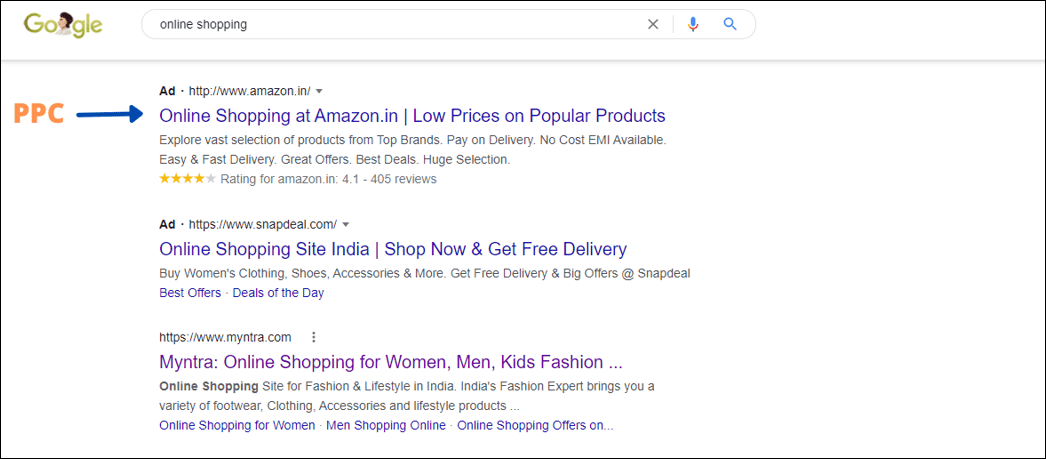
How PPC Works and Drives Traffic
PPC works by allowing advertisers to bid on specific keywords. When users search for those keywords, the ad appears in the search results. The advertiser pays a set amount each time their ad is clicked. This method drives targeted traffic to your website quickly, often resulting in higher conversions.
PPC provides immediate and measurable results. Key benefits include:
- Immediate Traffic: Instant visibility and traffic, unlike organic SEO strategies that take time.
- Targeted Audience: Ads can be targeted based on location, device, time, and user behavior.
- Measurable Results: Detailed analytics help businesses track ROI and refine campaigns.
- Brand Visibility: Ads appear at the top of search results, improving brand awareness.
Key components of PPC:
- Keywords: Selecting the right keywords for your ads.
- Ad Copy: Writing compelling copy to entice users to click.
- Landing Pages: Ensuring landing pages are relevant and optimized for conversions.
- Bidding Strategy: Setting appropriate bids to compete in auctions while staying within budget.
- Analytics: Monitoring performance to optimize campaigns and maximize ROI.
3. Social Media Marketing (SMM)
Social Media Marketing involves promoting a brand through platforms like Facebook, Instagram, Twitter, and LinkedIn. By sharing engaging content, businesses can connect with a targeted audience, build brand awareness, foster customer relationships, and increase sales.
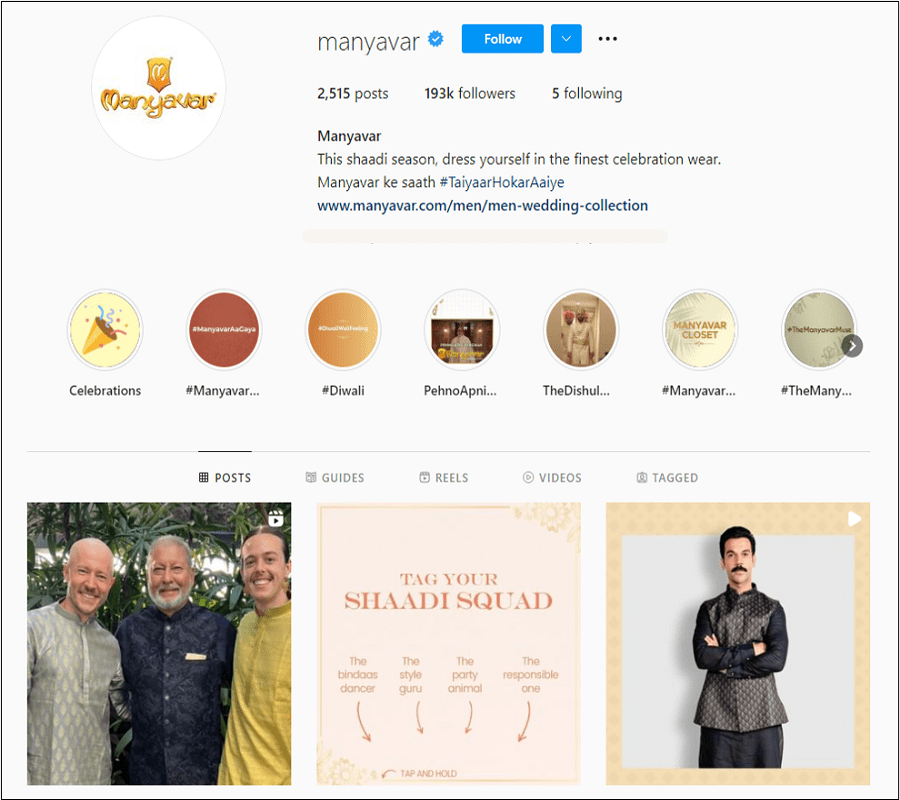
Popular Social Media Platforms for Marketing
Social media has become a cornerstone of digital marketing, offering businesses a way to engage with audiences directly. Popular platforms for marketing include:
- Facebook: Great for broad audience targeting and lead generation.
- Instagram: Ideal for lifestyle brands to showcase products through photos and stories.
- Twitter: Best for real-time engagement and trending conversations.
- LinkedIn: Focuses on B2B marketing, networking, and lead generation.
- TikTok: A fast-growing platform for creative, short-form videos, targeting younger demographics.
- Pinterest: Visual platform for lifestyle, fashion, and home décor brands.
- YouTube: Perfect for in-depth content, tutorials, and ads.
- Snapchat: Short-lived content aimed at connecting with younger users.
- Reddit: Engage in niche discussions and build trust through subreddit participation.
How Social Media Marketing Boosts Brand Awareness
By creating consistent, engaging posts and running targeted ads, businesses can build brand visibility. Social media marketing allows businesses to engage with users directly, helping to foster a sense of community, build trust, and enhance credibility.
4. Content Marketing
Content Marketing focuses on creating and sharing valuable, relevant content to attract and engage a target audience. The goal is to provide helpful information rather than directly promote products or services.
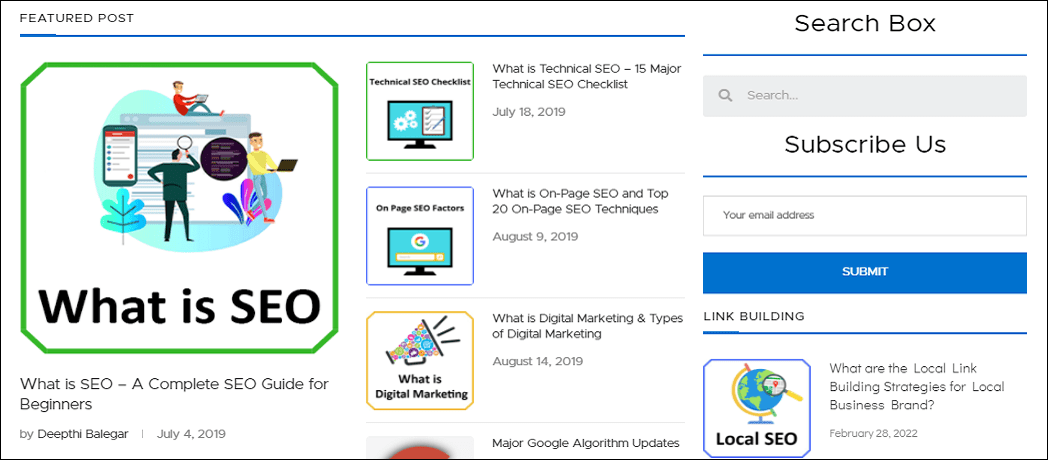
Content Types Used in Digital Marketing
- Blog Posts: Informative articles that educate and solve problems.
- Videos: Visually engaging content perfect for platforms like YouTube and Instagram.
- Infographics: Visual representation of complex data and ideas.
- Podcasts: Audio content that connects with audiences on the go.
- Social Media Posts: Short-form content used for quick updates and interaction.
- Ebooks/Whitepapers: In-depth resources for lead generation.
- Case Studies: Real-life examples showcasing how your product or service solves problems.
Why Content Marketing is a Powerful Tool
Content marketing builds trust and loyalty by delivering value to your audience. It helps improve SEO rankings, increases brand awareness, and positions your brand as an industry leader.
5. Email Marketing
Email marketing is a direct communication strategy to engage your audience by delivering personalized content straight to their inbox. It nurtures leads, builds relationships, and drives conversions through targeted campaigns.
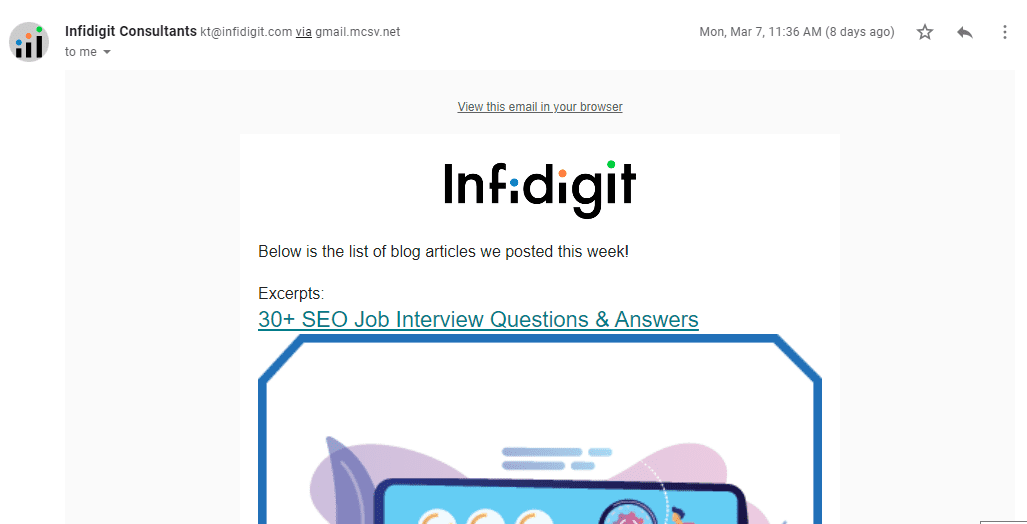
Types of Email Marketing
There are various types of email marketing campaigns that businesses can use to communicate with their audience, including:
- Promotional Emails: Focus on promoting products or services.
- Newsletter Emails: Provide updates, news, and curated content.
- Welcome Emails: Introduce new subscribers to your brand.
- Abandoned Cart Emails: Encourage customers to complete purchases by reminding them of their abandoned items.
Effective Email Campaign Strategies
To run a successful email campaign, businesses should implement targeted and well-planned strategies:
- Segmentation: Target emails based on user demographics, behavior, or interests.
- Compelling Subject Lines: Catch users’ attention with engaging subject lines.
- Clear Call-to-Action (CTA): Guide users toward a desired action.
- A/B Testing: Experiment with different formats to optimize performance.
- Mobile Optimization: Ensure emails are mobile-friendly for better user experience.
How Email Marketing Boosts Conversion Rates
Email marketing is highly effective in boosting conversion rates by delivering targeted, personalized messages to a specific audience. By segmenting your email list, you can send relevant offers and content that meet the needs and interests of different groups. Personalized emails make recipients feel valued, increasing the likelihood of engagement and conversions. Additionally, email campaigns with clear calls-to-action (CTAs) guide users toward completing a desired action, whether it’s making a purchase, signing up for a service, or downloading a resource. By tracking metrics like open rates, click-through rates, and conversions, businesses can refine their strategy to continually improve results.
6. Influencer and Affiliate Marketing
Influencer and Affiliate Marketing leverage third-party endorsements to boost brand visibility and drive sales.

Differences Between Influencer and Affiliate Marketing
- Influencer Marketing: Involves partnering with influencers to promote your brand through organic content and endorsements.
- Affiliate Marketing: Involves affiliates earning commissions for driving traffic or sales through their promotional efforts.
7. Viral Marketing
Viral marketing aims to create content that spreads rapidly across social media and beyond, driven by emotional resonance. Successful viral campaigns often evoke humor, surprise, or awe, resulting in exponential reach.
- Know Your Audience: Understand their interests and emotions to craft content they’ll want to share.
- Evoke Emotions: Use humor, surprise, or inspiration to encourage sharing.
- Leverage Trends: Utilize trending topics or viral challenges to boost visibility.
How to Create Content That Goes Viral
Creating viral content involves crafting something that resonates deeply with your audience and compels them to share it. Here are key strategies to increase your chances of going viral:
- Know Your Audience: Create content that speaks directly to their interests and emotions.
- Evoke Emotions: Use humor, surprise, or inspiration to encourage sharing.
- Keep It Simple: Ensure content is relatable and easy to understand.
- Leverage Trends: Ride on trending topics or viral challenges.
- Use Eye-Catching Visuals: Incorporate high-quality visuals to capture attention.
- Encourage Interaction: Add CTAs that prompt sharing, comments, or likes.
8. Mobile Marketing
Mobile marketing targets users on their smartphones or tablets, reaching them through apps, SMS, and mobile websites.
Mobile Optimization and its Role in Digital Marketing
Ensuring your website is mobile-friendly is critical for engaging users. Mobile optimization reduces bounce rates and improves search rankings, contributing to higher conversions.
Benefits of Mobile Marketing Campaigns
Mobile marketing campaigns offer several advantages for businesses:
- Increased Reach: Reach a larger, more engaged audience.
- Real-Time Engagement: Engage users instantly via SMS, push notifications, and in-app messages.
- Personalization: Tailor ads to users’ preferences and behaviors.
- Higher Conversion Rates: Optimized content increases conversions.
- Cost-Effective: More affordable than traditional marketing.
9. Native Advertising
Native advertising blends ads into the content surrounding them, offering a non-intrusive user experience.
Advantages of Using Native Ads
Native ads offer several key benefits for businesses:
- Higher Engagement: Ads blend naturally, leading to more interaction.
- Improved Brand Perception: Feels more authentic, increasing trust.
- Better Click-Through Rates: Higher likelihood of users engaging with native ads.
- Non-Interruptive: Provides value without disrupting the user experience.
Native ads allow brands to reach their audience effectively while enhancing the user experience.
10. Marketing Automation
Marketing automation uses software to automate marketing tasks like email campaigns, social media posting, and lead nurturing.
Key Tools for Marketing Automation
Marketing automation tools help businesses streamline marketing tasks, improve efficiency, and drive better results. Here are some top tools:
- HubSpot: Automates email marketing, social media, and lead nurturing.
- Mailchimp: Simple email automation with segmentation.
- Marketo: Advanced lead management for larger enterprises.
- ActiveCampaign: Email marketing and CRM integration.
- Pardot: B2B marketing automation by Salesforce.
- GetResponse: Email marketing, webinars, and landing page creation.
- Sendinblue: Multi-channel automation for email, SMS, and CRM.
- Drip: Ecommerce-focused tool for email workflows.
- Autopilot: User-friendly tool for automating customer journeys.
- Ontraport: Small business tool for email campaigns and lead tracking.
These tools empower businesses to automate tasks, enhance customer relationships, and drive better marketing outcomes.
How Marketing Automation Improves Efficiency
Marketing automation simplifies repetitive tasks, such as email campaigns and lead nurturing, by automating processes that would otherwise require manual effort. It allows businesses to send personalized messages at scale, ensuring relevance and engagement. Additionally, marketing automation tracks campaign performance, providing valuable insights to refine strategies. The result is faster execution, fewer errors, and a more efficient, effective marketing approach that drives better results.
Inbound Marketing: A Holistic Approach to Digital Marketing
Inbound marketing is a strategy that focuses on attracting, engaging, and delighting customers by providing valuable content and experiences. Rather than interrupting potential customers with traditional ads, inbound marketing draws them in by offering relevant content tailored to each stage of their journey. It leverages various tactics like SEO, content marketing, social media, and email marketing to build trust and address customer needs. This holistic approach not only generates leads but also nurtures long-term relationships, fostering sustainable business growth.
Key Components of Inbound Marketing
- Content Creation: Develop high-quality content, such as blogs, videos, and eBooks, that attract and inform potential customers. The focus is on providing value and solving problems at every stage of the customer journey.
- SEO (Search Engine Optimization): Optimize content to improve its visibility in search engine results, driving organic traffic. By using the right keywords and improving technical aspects of your website, you can ensure your content reaches the right audience.
- Social Media Marketing: Use platforms like Facebook, Instagram, and LinkedIn to promote your content and engage with your audience. Social media helps expand reach, foster conversations, and build a community around your brand.
- Lead Generation: Capture leads through strategically placed forms, offers, and calls to action that encourage visitors to share their contact information. These tools are key to converting website visitors into potential customers.
- Email Marketing: Nurture leads with personalized emails and targeted campaigns that guide them through the sales funnel. Email marketing builds relationships by offering value and staying top of mind for prospects.
- Analytics and Optimization: Continuously track and analyze performance to refine strategies and improve conversion rates. By understanding what works and what doesn’t, businesses can optimize campaigns for better results.
FAQs About Digital Marketing and Its Types
What is Digital Marketing?
Digital marketing refers to the use of online channels like websites, social media, email, and search engines to promote products, services, or brands. It focuses on reaching and engaging target audiences through digital platforms.
What are the top 10 types of digital marketing?
The top 10 types of digital marketing include:
- Search Engine Optimization (SEO)
- Pay Per Click (PPC)
- Social Media Marketing (SMM)
- Content Marketing
- Email Marketing
- Influencer and Affiliate Marketing
- Viral Marketing
- Mobile Marketing
- Native Advertising
- Marketing Automation
How do I choose the best type of digital marketing for my business?
Choose the best digital marketing strategy by considering your business goals, target audience, budget, and resources. Experiment with different tactics like SEO, social media, or PPC to see which generates the best results.
What is the future of digital marketing?
The future of digital marketing will focus on AI-driven personalization, voice search optimization, video content, and immersive technologies like AR/VR. Increased automation, data privacy, and advanced analytics will also play significant roles in shaping marketing strategies.
What are the benefits of digital marketing?
Digital marketing offers benefits like cost-effectiveness, global reach, targeted audience engagement, real-time analytics, and improved conversion rates. It allows businesses to track performance and optimize campaigns for better results and increased ROI.
What are the 7 C’s of digital marketing?
The 7 C’s of digital marketing are:
- Customer – Understanding your audience’s needs.
- Content – Creating valuable, relevant content.
- Context – Tailoring content to the platform.
- Connection – Engaging with customers.
- Communication – Building two-way conversations.
- Community – Fostering a loyal customer base.
- Conversion – Turning leads into customers.
What are the 7 P’s of digital marketing?
The 7 P’s of digital marketing are:
- Product – Offering valuable products or services.
- Price – Setting competitive pricing strategies.
- Place – Distributing through the right channels.
- Promotion – Using digital tactics to promote.
- People – Engaging with your target audience.
- Process – Streamlining customer interactions.
- Physical Evidence – Providing proof of quality and trust.