














In today’s fast-paced digital landscape, search engines have become indispensable tools for navigating almost every aspect of our lives. Whether we’re checking traffic before leaving home, discovering the latest movies, or deciding what to order for lunch, search engines provide instant access to a vast world of information. They don’t just help us learn and explore they also keep us connected to the latest trends, updates, and ideas shaping our world.
For businesses, search engines are more than just gateways to information they’re powerful channels for visibility, growth, and customer acquisition. This is where search engine optimization (SEO) plays a crucial role. SEO forms the foundation of an effective digital marketing strategy, ensuring that brands not only appear in search results but also stand out in an increasingly competitive online marketplace.
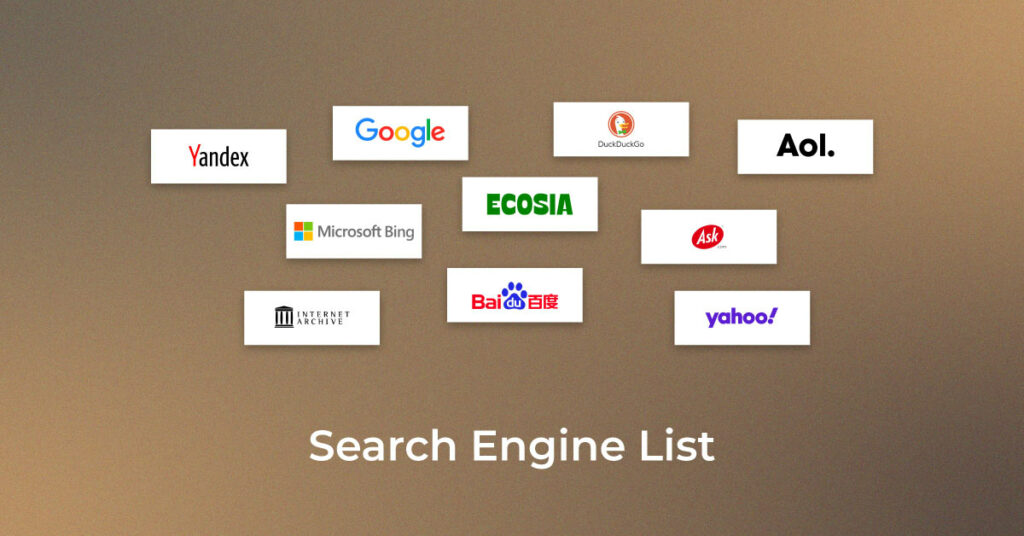
When exploring a comprehensive Search Engines List, it’s important to understand that while Google remains the most widely used platform globally, it’s not the only option available. Platforms like Bing, Yahoo, and other specialized search engines offer unique features tailored to different audiences and user intents. Whether you’re researching for personal interests or aiming to expand your business’s online presence, understanding the range of available search engines can help you navigate and succeed in today’s digital ecosystem.
List of Top search engines in 2026
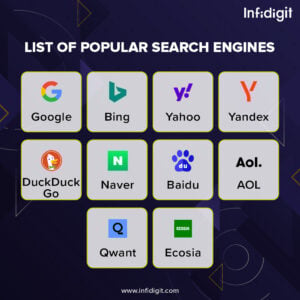
There are many search engines out there today, each trying to make its mark on the internet. While everyone knows Google, other search engines are also offering unique features. Some aim to be better than Google, while others focus on giving you a completely different experience. From search engines that protect your privacy to those powered by AI, each one brings something new to the table.
Here’s a list of search engines that stand out with their special features. Whether you want better privacy, more focused search results, or an improved user experience, these options are worth exploring.
| Search engines | Domain Traffic* (Semrush) | Global Market share*(%) |
|---|---|---|
| 164.6B | 89.66 | |
| Bing | 3.3B | 3.88 |
| Yandex.ru | 3B | 2.53 |
| Yahoo | 4.2B | 1.32 |
| DuckDuckGo | 4.4B | 0.84 |
| Baidu | 339.2M | 0.72 |
| Naver | 744.8M | - |
| AOL | 212.9M | - |
| Qwant | 42.2M | - |
| Ecosia | 359.6K | - |
Source: Gstatcounter (Search Engine Global Market Share data updated as per April 2025)
1. Google
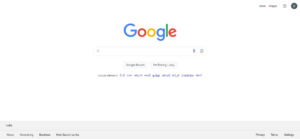
As of early 2026, Google continues to dominate the search engine market, holding a substantial market share of 88.5%. This stronghold is maintained through its continuously evolving algorithm and a sharp focus on delivering user-centric results.
While Google offers a wide range of apps through its G Suite, it is the search engine that truly established its global leadership. With an algorithm finely tuned to prioritize user intent, Google consistently delivers the most relevant and personalized results, making it the go-to search tool for billions of users worldwide. Its ongoing market leadership highlights its ability to adapt to and meet the changing demands of users better than any competitor.
Also Read: Top Google Searches
2. Bing
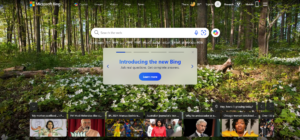
As of early 2026, Bing’s market share has risen to 4.1% globally, continuing to make strides in the search engine market, though it still faces challenges in mobile search.
Launched by Microsoft in 2009, Bing has steadily increased its presence, holding a 3.88% global share as of January 2026. While still far behind Google in terms of overall market dominance, Bing has made impressive gains in desktop search, now holding 11.2% of the market an increase of 65.8% from 2021. On mobile, however, its reach remains limited, maintaining only a 0.6% share, consistent with its performance over the past few years. Despite being a distant second to Google, Bing’s continued growth in desktop search presents a valuable opportunity for businesses aiming to optimize their presence on the platform.
3. Yandex
As of early 2026, Yandex continues to dominate the Russian search engine market, holding a strong 72% market share, while globally, it commands 2.53% of the search market.
Yandex, a Russian search engine, has a global market share of 1.63% as of January 2026. While its global reach remains modest, Yandex is a key player in local markets. In Russia, it leads with nearly 73% of the market, with Google lagging behind. Yandex also maintains a notable presence in Turkey, where it held a 41% market share in 2025. For businesses aiming to reach Russian or Turkish audiences, optimizing for Yandex can be a highly effective strategy.

4. Yahoo
As of early 2026, Yahoo holds 1.3% of the global search market, maintaining its presence as a reliable alternative to Google, despite the latter’s dominance.
Launched nearly 30 years ago, Yahoo! Search continues to attract millions of users, with over 4 billion monthly visitors in 2025. While its popularity has declined in the wake of Google’s rise, Yahoo remains a solid search engine powered by Bing. Known for its user-friendly interface, Yahoo offers a robust search experience, complete with features like the ability to compose emails directly from the search bar. Though its market share is smaller, Yahoo continues to generate consistent traffic, supported by its legacy and integrated services.

5. DuckDuckGo
As of early 2026, DuckDuckGo holds a 0.9% share of the global search engine market, with a notable 1.92% share of the U.S. market, continuing to grow as a privacy-focused alternative to more mainstream search engines.
DuckDuckGo, recognized for its strong emphasis on user privacy, has seen impressive growth in recent years. In 2025, the platform handled 35.3 billion annual searches, with 3.1 billion searches each month. With over 46 million users, DuckDuckGo has carved out a strong position in the search engine landscape. Along with its search functionality, it offers a browser extension that blocks trackers and encrypts connections, providing users with an added layer of privacy. Despite being smaller than industry giants like Google, DuckDuckGo’s commitment to privacy has earned it a loyal and growing user base.

6. Baidu
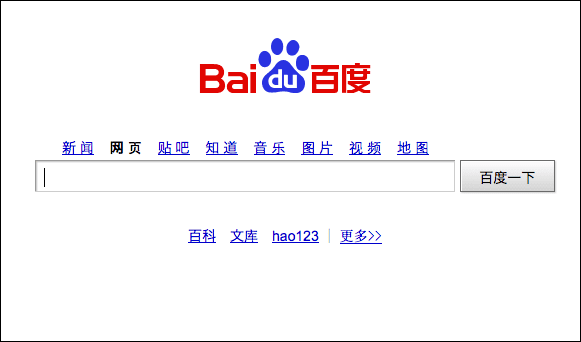
As of early 2026, Baidu remains the dominant search engine in China, commanding a 47.1% market share, while Bing holds second place with 30.8%, and Haosou (360search) follows with 9.1%. Globally, Baidu accounts for just 0.72% of the search market, while Google has a very limited presence in China due to government restrictions.
Launched in 2000 by Eric Xu, Baidu has grown to become China’s largest search engine, with a commanding 76.1% market share, far surpassing Google’s presence in the country. Despite Google being technically available in China, its market share is minimal around 2% due to stringent government regulations. Beyond search, Baidu offers a wide range of services, making it a central player in China’s digital landscape.
7. Naver
Naver, a South Korean search engine, is operated by Naver Corporation and was launched in 1999. It was the first South Korean platform to develop and use its own search engine. Beyond its search capabilities, Naver also offers a range of services, including an email platform and Knowledge iN, an online Q&A platform. Naver made history as the first search engine operator globally to provide a comprehensive search feature that gathers results from various categories and displays them all on a single page. This innovative approach has helped Naver become a key player in South Korea’s digital landscape.

8. AOL
Founded in 1983 as Control Video Corporation, AOL is one of the pioneers in the search engine space. It became widely known for mailing CDs to users so they could install its software on their computers. In 1991, Control Video Corporation was rebranded as America Online, and in 2009, it was officially named AOL Inc. After being acquired by Verizon Communications for $4.4 billion, AOL has evolved beyond just a search engine, now offering a range of services including AOL Mail, AOL Advertising, and the AOL Platform. Despite its early dominance, AOL continues to be a relevant player in the digital world.

Further Reading: How do Search Engines Work? A Beginner’s Guide
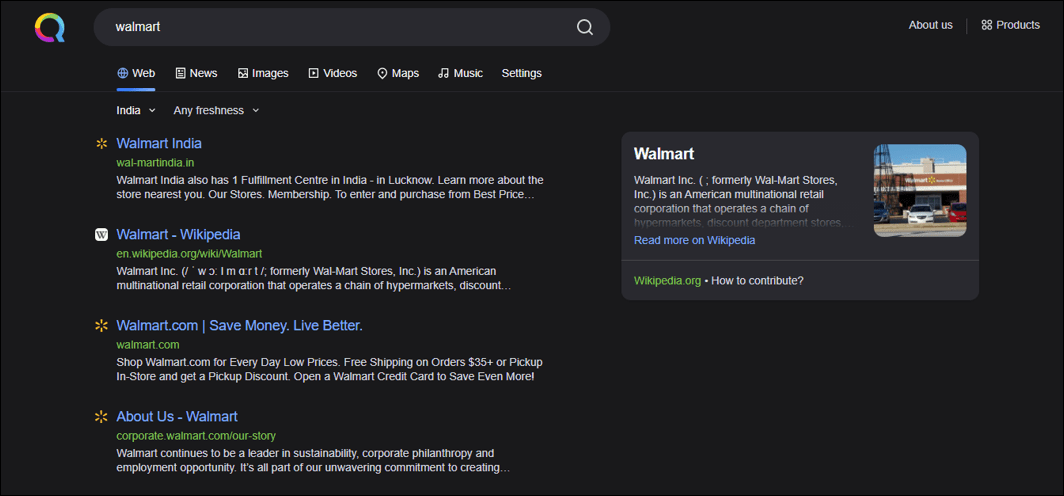
9. Qwant
Founded in 2013, Qwant is a search engine based in the European Union, available in 26 different languages. It stands out as one of the few EU-based search engines with its own original indexing engine. Qwant places a strong emphasis on user privacy and data protection, which is why it does not offer a highly customizable experience. In 2019, it ranked as the 86th most popular domain in France. With its algorithm handling over 10 million queries daily, Qwant continues to grow as a privacy-focused alternative to more mainstream search engines.
10. Ecosia
If you’re passionate about sustainability and caring for the planet, Ecosia is the perfect search engine for you! Known for its eco-friendly approach, Ecosia plants a tree for every 45 searches made on its platform. This makes it a fantastic alternative to Google, whose search engine contributes significantly to carbon emissions and climate change. By using Ecosia, you can support reforestation efforts and make a positive impact on the environment with every search.

Understanding the Different Types of Search Engines
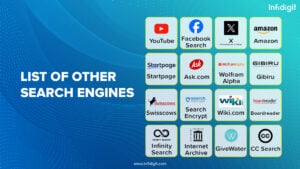
While Google, Bing, and Yahoo continue to dominate the search engine landscape, there are many other platforms that cater to specific needs. This list highlights alternatives that focus on privacy, niche content, and unique search experiences. Whether you’re interested in social media searches, e-commerce results, or encrypted browsing, these search engines offer diverse ways to explore the web beyond the traditional options. Each one provides a specialized approach, allowing users to discover new ways to access and interact with information online.
| Sr.no | Search engines | Domain traffic (Semrush) |
|---|---|---|
| 1 | YouTube | 110.3B |
| 2 | Facebook Search | 17.9B |
| 3 | Twitter ((X) formerly known as Twitter) | 9B |
| 4 | Amazon | 4.3B |
| 5 | Startpage | 67M |
| 6 | Ask.com | 26M |
| 7 | Wolfram Alpha | 12.6M |
| 8 | Gibiru | 2.8M |
| 9 | Swisscows | 2.2M |
| 10 | Search Encrypt | 615.2K |
| 11 | Wiki.com | 29.2K |
| 12 | Boardreader | 17.8K |
| 13 | Infinity Search | 9.7K |
| 14 | Internet Archive | 2.7K |
| 15 | GiveWater | 570 |
| 16 | CC Search | - |
1. YouTube
YouTube’s reach is undeniable, with a user base spanning across 100 countries and available in 80 languages. In the U.S., YouTube videos appear on search engine results pages (SERPs) over 791 million times each month, further solidifying its importance in the digital space. India leads with the largest audience of 476 million users, followed by the U.S. with 238 million and Brazil at 147 million.
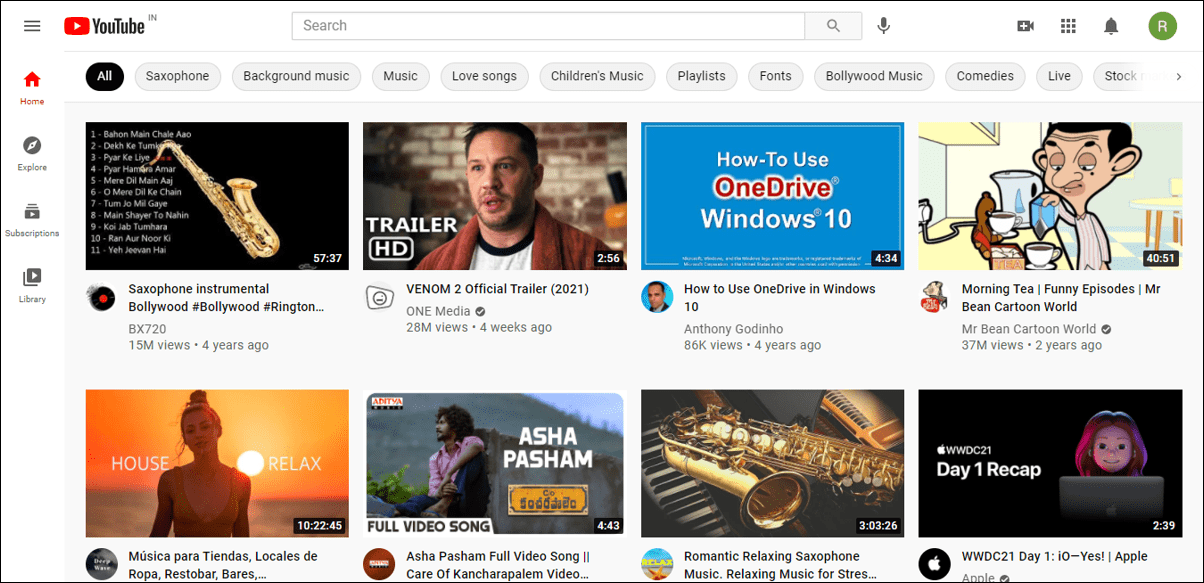
YouTube continues to evolve its search engine features, providing users with personalized video content, news, and other resources. It’s an essential platform for businesses, marketers, and content creators, playing a critical role in how information is searched and discovered online.
Further Reading: Top Youtube Searches
2. Facebook Search
Processing 1.5 billion searches daily, Facebook’s search engine plays a significant role in online searches, processing about 40% of the daily searches handled by Google. However, Facebook’s search is limited to its own ecosystem, meaning it only returns results from posts, pages, groups, and other content within Facebook.

While its scope is narrower compared to Google, Facebook offers highly relevant, personalized results tailored to its vast user base. This makes Facebook a valuable tool for businesses and marketers who want to track brand mentions, analyze customer feedback, and understand public sentiment.
3. X (Formerly Known as Twitter)
X utilizes the open-source search engine Lucene, which uses a sophisticated algorithm to process over a billion queries each day. The platform’s search engine delivers relevant, real-time results, making it a key tool for users and businesses looking for up-to-date information.

4. Amazon
Amazon’s search engine, A9, powers the shopping site and platforms like Prime Video. While it’s not widely recognized as a search engine, A9 is one of the most powerful e-commerce search tools globally. It plays a crucial role for businesses, making it essential for optimizing products and content on Amazon’s platform to leverage A9’s algorithm for better visibility.
5. Startpage
For those who love Google but want to keep their search activity private, Startpage is an excellent choice. It delivers Google’s search results but without tracking user data. It also offers features like HTTPS support, a URL generator, and a proxy service to further enhance privacy.

6. Ask.com
Once known as Ask Jeeves, Ask.com takes a unique approach by offering a question-and-answer format for search results. Users input queries, and the platform pulls answers from archived data and the community. While Ask.com has partnered with another search engine to improve results, it still stands out for its Q&A-driven model.

7. Wolfram Alpha
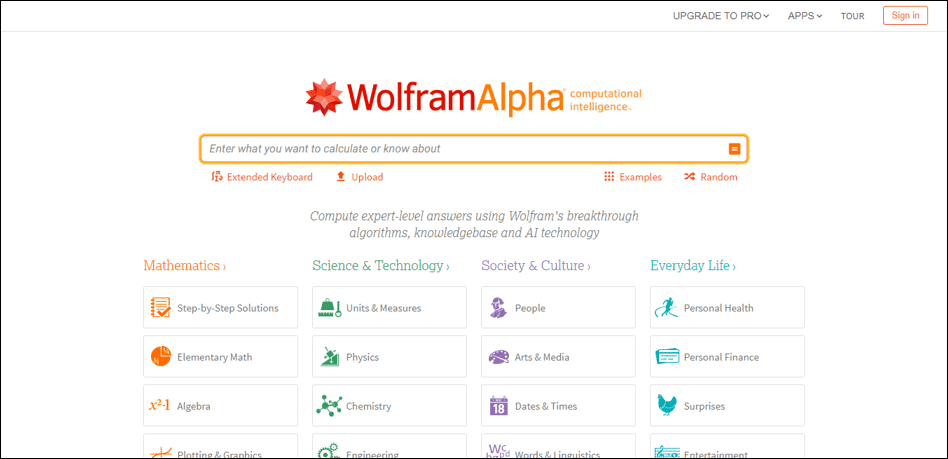
Wolfram Alpha is a computational knowledge engine that doesn’t offer traditional web links but provides answers directly from data and facts. It’s designed for users seeking systematic data, making it especially useful for educators, students, and researchers. Wolfram Alpha also offers a Pro version for more in-depth queries.
8. Gibiru
Gibiru positions itself as a privacy-first search engine that offers a version of Google’s algorithm without the tracking. It promotes itself as faster and more secure, providing results without cookies, thus prioritizing user privacy over personalized data collection.

9. Swisscows
Swisscows uses AI to deliver relevant search results while ensuring user privacy. It doesn’t track or store personal data, making it an attractive option for privacy-conscious users. Swisscows is still growing, but its AI capabilities make it a compelling choice for those looking for accurate and private search results.

10. Search Encrypt
Search Encrypt is focused on privacy, using local encryption methods to protect your search queries. By using AES-256 and Secure Sockets Layer encryption, Search Encrypt ensures that your data remains private. Once searches are completed, the information expires, ensuring that your search history isn’t accessible to others.

11. Wiki.com
Wiki.com pulls answers from the vast collection of wiki-based content across the internet. Its algorithm analyzes the keywords in your query and fetches the most relevant answers from platforms like Wikipedia and other wiki sources.

12. Boardreader
Boardreader is perfect for finding forums or message boards related to specific topics. By using your search keywords, it helps you discover communities and discussion threads that match your interests, making it a great tool for niche searches.

13. Infinity Search
Infinity Search, powered by Innovare Technologies, is a privacy-focused search engine that combines its own index with results from other search engines to provide accurate, personalized results. It also allows users to blacklist sites and edit CSS settings to further customize the search experience.

14. Internet Archive
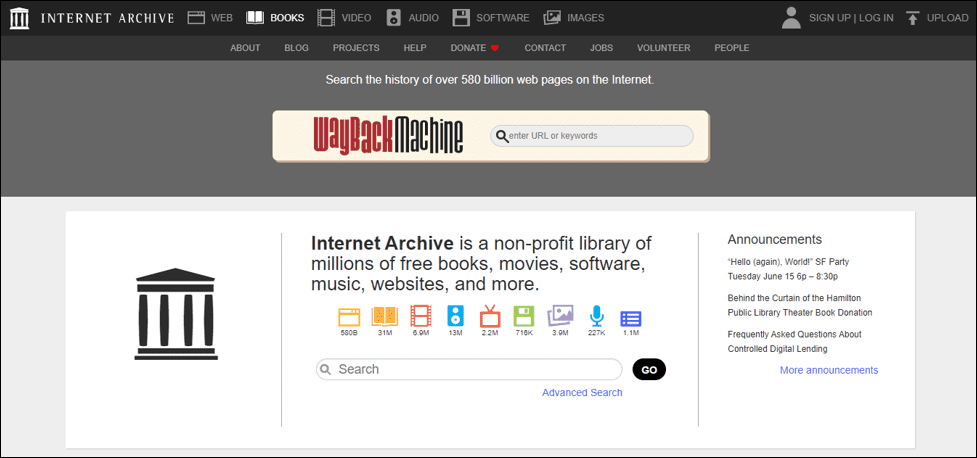
The Internet Archive offers a unique search experience by enabling users to explore the history of websites. It provides access to how websites have evolved since 1996, making it a valuable tool for researchers and history enthusiasts looking to track web development over time.
15. GiveWater
GiveWater is a socially responsible search engine that focuses on solving the global water crisis. Just like Ecosia, it uses its resources and revenues to fund sanitation systems and bring clean water to developing countries, making it a great choice for users wanting to make a positive impact.

16. CC Search
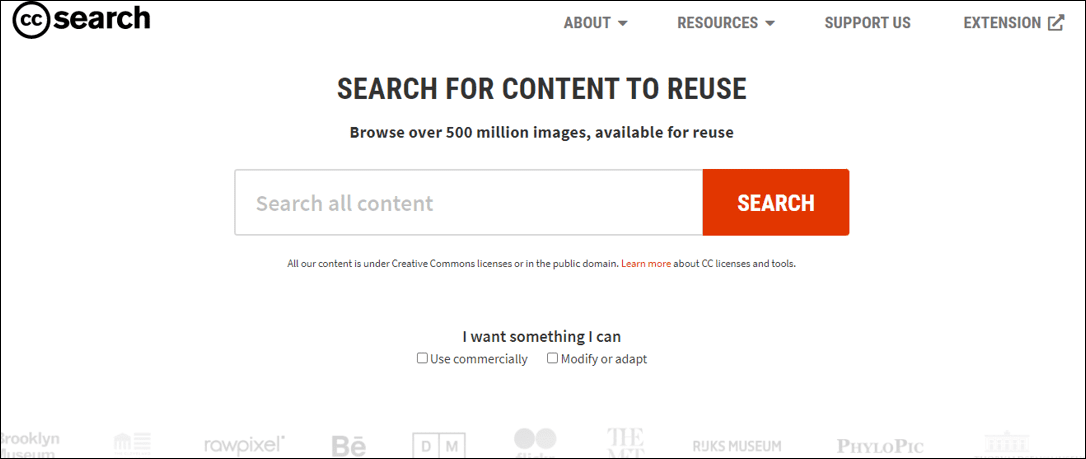
For those needing copyright-free media, CC Search is a fantastic platform. It leverages Wikimedia, Flickr, and SoundCloud to provide results that are marked as Creative Commons, making it the go-to source for free images, audio, and other media.
Choosing the Right Search Engine: Key Considerations
While Google is often the go-to search engine, there are plenty of alternatives offering unique features tailored to different needs. Whether it’s privacy, personalized results, or specialized searches, you have a wide variety of options to choose from. Simply consider your priorities such as privacy, filters, and ease of use to determine which search engine fits your needs best.
Types of Search Engines
- Crawler-Based Search Engines: These use automated bots to scan and index websites. Examples: Google, Bing, Yahoo, Baidu, Yandex.
- Human-Powered Directories: Curated by human editors, these directories categorize websites. Example: Best of the Web.
- Hybrid Search Engines: Combine crawler-based and human-powered results for more accuracy.
- Meta Search Engines: Aggregate results from multiple search engines. Example: Dogpile, Metacrawler.
- Vertical Search Engines: Specialize in specific industries or content types. Example: Kayak (travel), Indeed (jobs).
- Semantic Search Engines: Use AI to understand user intent and context. Example: Google.
- Private Search Engines: Focus on protecting user privacy. Example: DuckDuckGo, StartPage.
- Image and Video Search Engines: Specialize in finding multimedia content. Example: Google Images, YouTube.
- Shopping Search Engines: Focus on e-commerce product comparisons. Example: Amazon, PriceGrabber.
Top 50 Search Engines List based on Category
General Search Engines
- Google – The most popular search engine globally.
- Bing – Microsoft’s search engine.
- Yahoo! – A long-standing web directory and search engine.
- Baidu – The leading search engine in China.
- DuckDuckGo – Focuses on user privacy and does not track searches.
- Yandex – Russia’s largest search engine.
- Ask.com – A question-and-answer-based search engine.
- AOL Search – AOL’s search service.
- Ecosia – A search engine that plants trees for searches.
- Qwant – A privacy-focused search engine based in France.
- StartPage – A privacy-centric search engine that uses Google results.
- Searx – An open-source metasearch engine.
- Search Encrypt – A privacy-friendly search engine.
- WolframAlpha – A computational knowledge engine.
- Boardreader – A search engine for forums and message boards.
- Dogpile – A metasearch engine that combines results from multiple engines.
- WebCrawler – An early metasearch engine.
- MetaCrawler – Another metasearch engine for combining results.
- Sogou – A leading Chinese search engine.
- Haosou (360 Search) – A search engine by Qihoo 360 in China.
- Shenma – A mobile-first search engine in China.
- Gigablast – An independent search engine with real-time indexing.
- Yippy – A deep web/metasearch engine that categorizes search results dynamically.
- Seva – A metasearch engine with a privacy-focused approach.
Image Search Engines
- Bing Image Search – Focused on finding images.
- Yahoo! Image Search – Yahoo’s image search engine.
- Flickr – Primarily an image hosting service with search capabilities.
- Pexels Search – Searchable database of free stock images.
Academic and Research Engines
- Google Scholar – Specialized in academic literature.
- PubMed – A search engine for medical and scientific articles.
- JSTOR – Access to academic journals, books, and primary sources.
- IEEE Xplore – A digital library for engineering and technology research.
- ScienceDirect – Database for scientific and technical research.
- WorldCat – A global catalog of library collections.
Local and Review Engines
- Yelp – A search engine for finding local businesses and reviews.
- TripAdvisor – Focused on travel-related content and reviews.
E-commerce and Auction Platforms
- Amazon – An e-commerce platform with a powerful search engine.
- eBay – An online auction platform with search capabilities.
Job Search Engines
- Indeed – A job search engine.
- LinkedIn – A professional networking site with a job search function.
- Glassdoor – A job and company review platform with a search engine.
Real Estate Search Engines
- Zillow – A real estate search engine.
- Trulia – Another real estate search engine.
- Health and Medical Search Engines
- Healthline – A health-related search engine.
- WebMD – A medical information search engine.
Entertainment and Media Search Engines
- IMDb – A movie and TV database search engine.
- Goodreads – A book recommendation and search engine.
- Pinterest – A visual discovery engine for finding ideas.
- Last.fm – A music recommendation and search engine.
- SoundCloud – A platform for discovering and sharing music.
- BitChute – A video hosting platform that allows users to search for content.
News and Content Aggregators
- Google News – A news aggregator and search engine.
- Feedly – An RSS aggregator with search capabilities.
- Archive.org – The Internet Archive’s search engine for archived web pages.
- Yummly – A search engine for recipes.
AI Search Engines
- Perplexity.ai – An AI-driven search engine that provides direct answers with citations.
- You.com – A customizable AI-powered search engine that offers summarized results.
- NeevaAI – An ad-free AI search engine with real-time, context-aware results.
- ChatGPT Search – Uses OpenAI’s ChatGPT to generate answers instead of listing traditional search results.
- Seekr – An AI-driven search engine that evaluates search results for credibility and bias.
- Brave Search – An Independent and privacy-focused AI search engine with real-time indexing.
- Komodo AI – Uses AI to analyze and summarize search results for research purposes.
- Andi Search – An AI-powered conversational search engine that delivers clear, chatbot-style responses.
- Elicit.org – An AI-powered research search engine that helps analyze academic papers.
- Phind – An AI-based search engine optimized for developers, providing code-related answers.
The Future of Search Engines
The future of search engines is poised to revolutionize how we discover and interact with information online. With advancements in AI, machine learning, and natural language processing, search engines are evolving beyond traditional keyword-based searches. They’re becoming smarter, understanding user intent, context, and preferences, leading to more personalized, intuitive, and relevant results.
Soon, search engines may anticipate your needs even before you make a query, seamlessly integrating text, voice, visual, and augmented reality-based searches. Research shows that about 71% of users prefer speaking to their devices rather than typing, making voice search a critical component of the future. Mobile search, in particular, is already shifting SEO strategies to focus more on conversational keywords and phrases.
Privacy will also be a major focus as search engines prioritize data security, transparency, and user control. Users will have greater power over their data while still receiving high-quality search results. As smart device integrations deepen, envision scenarios where you ask your fridge for recipe ideas or your car for live traffic updates and restaurant recommendations.
Ultimately, the future of search engines will center on enhancing user experience, blending convenience with deep personalization. As these technologies evolve, they will significantly transform how we live, work, and connect, making information more accessible than ever before.
Conclusion
The evolution of search engines is transforming how we access and interact with information. With innovations like AI-driven algorithms, voice search, and visual search features, these advancements are creating more seamless, intuitive digital experiences. As technology continues to advance, search engines will become even more sophisticated, enhancing our ability to discover and interact with knowledge in unprecedented ways.
Now that you’ve explored the future of search engines, it’s a great time to dive deeper into other aspects of digital marketing, like search engine optimization (SEO). Understanding SEO techniques can help improve your website’s visibility and performance, ensuring you stay ahead in this ever-changing digital world.
FAQ’s:
Which Country Uses Google the Most?
| Country | Google Monthly Traffic (billions) | Share of Global Traffic |
|---|---|---|
| United States | 18.15 | 18.28% |
| India | 11.74 | 11.82% |
| Japan | 5.51 | 5.55% |
| Indonesia | 4.42 | 4.45% |
| Brazil | 3.29 | 3.31% |
Source: World population review
How do Search Engines Make Money?
There are two types of search results on the search engine; organic and paid search. When you have a strong SEO strategy and strictly adhere to search engine algorithms, your site earns a spot on search engines through organic search. On the other hand, paid searches are when you pay a set amount for each click on your ad. Such searches quickly rise to the top of search results. In organic search, you may need to work on the site for six to twelve months to gain better visibility. Paid searches are the primary source of revenue for search engines.
Which Search Engines Use Their Own Crawlers?
Several search engines utilize their own crawlers to index web content. For instance, Google uses Googlebot, Bing employs Bingbot, and Yandex operates with YandexBot. These crawlers help the search engines maintain up-to-date and comprehensive indexes of the web.
Which Search Engines Use AI?
To enhance functionality, many search engines are now incorporating AI. Google uses AI in its BERT and MUM algorithms to improve search results. Bing also employs AI for better search result accuracy and personalized experiences. Baidu, the leading search engine in China, extensively uses AI for search enhancements.
What Is the Oldest Search Engine?
It is Archie, created in 1990 by Alan Emtage, a student at McGill University in Montreal. Did you know that this oldest search engine is still in use today? While Archie was not a search engine in the modern sense, it was the first tool to index FTP archives. This is what makes it a precursor to the search engines we use today.
What Is a Search Engine?
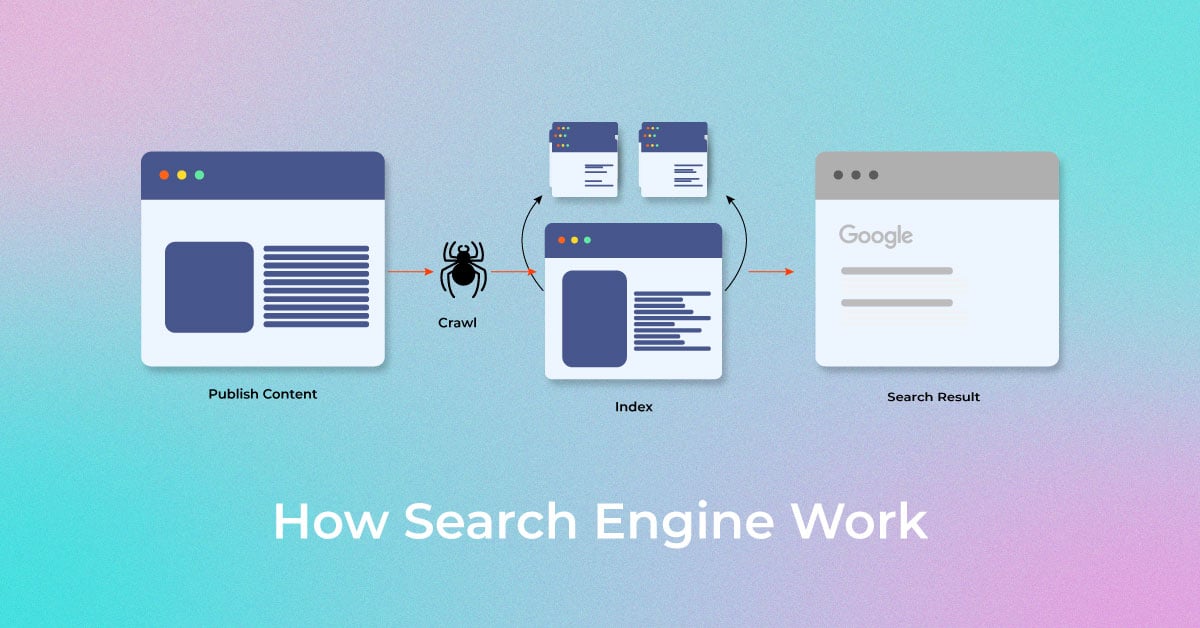
A search engine is a software system designed to perform web searches efficiently. It systematically scans the World Wide Web for specific information based on a user’s textual search query. The search engine then presents the results in a list, commonly known as search engine results pages (SERPs). These results can include web pages, images, videos, infographics, articles, research papers, and various other file types.
There are many names of search engines that users rely on daily, each offering unique features and functionalities to enhance the search experience.
Which is the best search engine?
The best search engine depends on your needs:
- Google: Most popular with advanced, relevant results.
- Bing: Integrates well with Microsoft products and offers rewards.
- DuckDuckGo: Ideal for privacy-focused users.
- Yahoo: Popular in some regions, powered by Bing.
For most, Google is the top choice, but alternatives may suit specific preferences.
What are some examples of popular search engines?
Some popular examples from the search engines list include:
- Google – The most widely used search engine worldwide.
- Bing – Microsoft’s search engine, often used as an alternative to Google.
- Yahoo – Powered by Bing, popular in certain regions and for news aggregation.
- Baidu – The leading search engine in China.
- DuckDuckGo – Known for protecting user privacy by not tracking search history.
These search engines offer a variety of features to help users find information online.
What are the different types of search engines?
Search engines are classified based on their purpose and functionality:
- General Search Engines – Provide broad search results across the web.
- Image Search Engines – These specialize in finding images.
- Academic & Research Engines – Focus on scholarly and scientific content.
- Local & Review Engines – Help users find businesses, services, and reviews.
- E-commerce Search Engines – Designed for shopping and product searches.
- Job Search Engines – Assist in finding job listings and career opportunities.
- Real Estate Search Engines – Help users search for homes and properties.
- Entertainment & Media Search Engines – Cover books, movies, music, and visual content.
- News & Content Aggregators – Gather news and updates from various sources.
- AI Search Engines – Use artificial intelligence to generate direct answers.
Each type serves a unique purpose, making online searches more efficient and targeted.
What search engine is the safest to use?
Here is our list of the most popular and trustworthy private search engines to choose from:
- Startpage.
- DuckDuckGo.
- Qwant.
- Searx.
- SearchEncrypt.
- Gibiru.
- Ecosia.
- Swisscows.





4 thoughts on “Search Engines List: Top Global Search Engine Platforms for Every Need”
Nice post
Thank you, Aman. Subscribe to us for more latest updates.
One of the most valuable blog for Digital Marketing. Thanks for posting such a valuable kinds of post.
You are Welcome, Rajesh. Check out our latest posts for more updates.